
Check the venue and gaming hours before you go
Venue-specific checks help distinguish general trading hours from whether the pokies area is operating at the time of a visit.
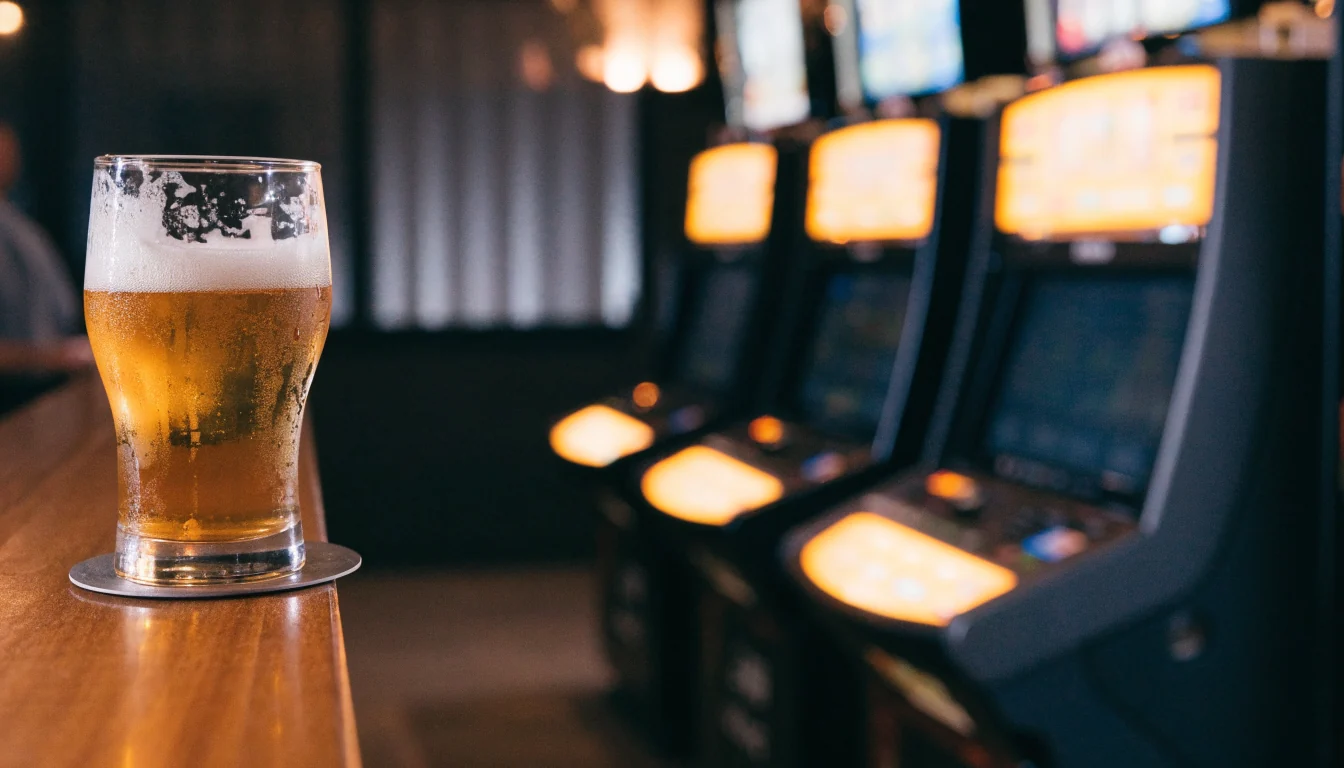
Checking Whether a Canberra Venue Is Open
Whether a visit is possible now depends on the opening status of the particular Canberra venue and, where relevant, whether its pokies area is operating. A general statement that a venue is open does not necessarily settle both points. Opening hours can also change, so an old listing or a result without a clear update date is not a dependable basis for setting out.
The practical check is venue-specific and current. The venue’s own website or official social channels may publish trading hours or temporary changes; a direct call is the clearest way to confirm a detail that is not stated there. The question should be precise: is the venue open at the intended time, and are its pokies available then? If a public listing gives only general venue hours, it should not be treated as proof that the gaming area is operating.
This distinction matters when the intended visit is early in the day or later at night. A venue may have different schedules for different areas, or its published hours may not cover a temporary closure or change in service. None of that can be resolved by the wording of a listing alone. For an early or late visit, confirmation from the venue close to departure is more useful than relying on a schedule copied elsewhere. If the venue cannot confirm the gaming area’s hours, the operating status remains uncertain.
Choosing online pokies while in Canberra means looking beyond the game category to the details available about each casino. This overview gives a concise reference point for the listed operators in 2026.
-
WinSpirit Casino
- License
- Curacao eGaming OGL/2024/923/0383 (Antillephone N.V.)
- Min. deposit
- A$30
WinSpirit Casino lists a Curaçao eGaming licence, OGL/2024/923/0383, issued through Antillephone N.V. Its minimum deposit is A$30.
-
Bizzo Casino
- License
- Curacao Gaming Control Board (TechSolutions Group N.V.)
Bizzo Casino lists a Curaçao Gaming Control Board licence, with TechSolutions Group N.V. named as the operator.
-
JeetCity Casino
- License
- Curacao eGaming (Dama N.V.)
JeetCity Casino lists a Curaçao eGaming licence, with Dama N.V. named in its licensing details.
-
House of Pokies
- License
- international iGaming licence – jurisdiction not named in the source
- Payout speed
- PayID 1-24 hours
- Min. deposit
- A$30 (PayID from A$10)
House of Pokies lists an international iGaming licence, though the jurisdiction is not named in the available information. PayID payouts are stated as taking 1–24 hours; the minimum deposit is A$30, or A$10 when using PayID.
-
LevelUp Casino
- License
- Curacao eGaming OGL/2023/174/0082 (Dama N.V.)
- Min. deposit
- A$15
LevelUp Casino lists a Curaçao eGaming licence, OGL/2023/174/0082, through Dama N.V. Its minimum deposit is A$15.
-
LuckyVibe
- License
- Curacao Gaming Control Board OGL/2023/176/0095 (Hollycorn N.V.)
LuckyVibe lists a Curaçao Gaming Control Board licence, OGL/2023/176/0095, through Hollycorn N.V.
-
Playfina Casino
- License
- Curacao eGaming (Hollycorn N.V., since 2017)
- Min. deposit
- A$20-30 (depends on the offer)
Playfina Casino lists a Curaçao eGaming licence through Hollycorn N.V., which is stated to have held it since 2017. Its minimum deposit is A$20–30, depending on the offer.
-
JustCasino
- License
- Curacao Gaming Control Board
JustCasino lists a Curaçao Gaming Control Board licence. No further operator-specific details are provided here.
-
Vegaz Casino
- License
- Curacao OGL/2024/1335/0780
- Min. deposit
- EUR 20
Vegaz Casino lists a Curaçao licence, OGL/2024/1335/0780. Its minimum deposit is EUR 20.
-
Golden Pokies
- License
- Curacao
Golden Pokies lists a Curaçao licence. No further operator-specific details are provided here.
The same standard applies to searches that ask whether Canberra pokies are open now. “Now” is not a stable fact: it changes with the time of checking, and a page that was accurate earlier may no longer describe the current position. A result shown by a map or directory can be a useful lead, but it is not a live assurance. A phone line that is unanswered does not confirm that a venue is closed, either; it simply leaves the status unresolved. The decision then rests on whether the venue can provide a current answer, not on an inference from missing information.
It is useful to separate three details before travelling: the venue’s general trading hours, the hours of the area containing the pokies, and any temporary change to either schedule. One may be published while another is not. A venue’s current confirmation should resolve the specific time being considered, rather than invite an assumption that all facilities operate on the same timetable. Where the answer is unclear, treating the visit as unconfirmed is more accurate than treating a broad opening label as a guarantee.
Search results can also preserve outdated information after hours have changed. A listing may display a schedule without showing when it was checked, or repeat details maintained by a third party rather than the venue itself. That is not evidence that the information is false; it is a reason to verify it before relying on it. The cost of checking is small compared with the wasted trip that follows from treating an unconfirmed schedule as current.
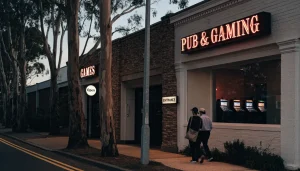
Opening status is separate from other questions about a venue. A venue being open does not establish the return percentage of its pokies, and a search result mentioning a payout percentage does not establish that the venue or gaming area is open at the intended time. These are different facts and require different confirmation. Keeping them separate prevents a general listing from appearing to answer more than it actually does.
The useful result of checking is a clear answer tied to a specific venue and intended visit time. If the venue confirms that it is open and that pokies are operating, the question of whether a visit is possible has been answered for that occasion. If the information comes only from an undated third-party listing, or if the venue cannot confirm the gaming area’s schedule, the answer is not established. An ordinary phrase such as “open now” carries no extra weight unless it is supported by current venue-level information.
For that reason, no broad claim about Canberra venues being open at a particular moment can substitute for checking the venue itself. Current operating status is not something to infer from the city, the type of venue, or a search result’s wording. It is a time-sensitive detail, and confirmation should come from the place being considered.
Do
- Check the venue's own website or official social channels
- Call the venue directly to confirm specific hours
- Confirm both venue access and pokie area operation
Don't
- Rely on old listings or undated search results
- Assume a general "open" label covers the gaming area
- Treat an unanswered phone call as proof of closure
What Game Returns and Randomness Can—and Cannot—Tell You
A return-to-player figure can help describe a pokie’s designed behaviour over a very large number of plays. It cannot forecast the result of a particular spin, session or visit. That distinction matters when comparing claims about the best-paying pokies in Canberra: a return percentage, where reliably disclosed, is a long-run statistical measure, not a promise about what will come back during an individual stretch of play.
There is also a configuration issue. A specialist review has reported that some game providers give casinos a choice of more than one RTP setting for the same pokie. If that is the case for a particular game, its return percentage may differ between casinos even though its name and visible features are the same. A figure attached to a game in one setting therefore cannot automatically be treated as the figure in another.
That point limits what a general comparison can establish. Game title alone does not identify the RTP setting in use. Nor does the fact that a pokie is available at a Canberra venue establish its return percentage. A useful comparison needs a figure tied to the specific version and setting, with enough context to establish what is being measured. Without that connection, a stated percentage may be accurate for one configuration but not informative about another.
RTP also does not rank venues by the result a patron will receive. It describes a theoretical return across repeated play, while an actual session is a small sample. A session can finish above or below that theoretical measure; neither outcome proves that the underlying setting has changed. The gap between long-run design and short-term result is not a technical footnote. It is the reason a return figure cannot be converted into a forecast.
Every pokie spin is an independent event determined by a Random Number Generator. The result of one spin does not make a particular result more or less due on the next spin. A run of losses does not create an obligation for a win, and a recent win does not establish that another is less likely. The machine does not keep a running account of what a player feels is owed.
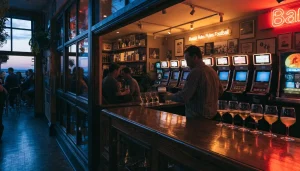
This independence also means that observing a short sequence cannot reliably reveal the setting or predict the next outcome. A cluster of wins may occur under one setting; a long losing stretch may occur under the same setting. Neither pattern, on its own, supplies evidence that a game has changed its return configuration. Random variation is part of the process, not proof of a hidden adjustment.
For anyone comparing pokies in Canberra or the CBD, the practical distinction is between information about a game and claims about a result. A documented RTP setting can describe one feature of a specific configuration. It cannot identify a guaranteed best option, establish what any individual will win, or show that one venue will produce better short-term outcomes. Claims that use “best” or “best paying” as if they predict a session go beyond what RTP and randomness can support.
The same restraint applies to a title found in multiple places. Matching artwork and rules do not, by themselves, establish matching RTP settings. Conversely, a different session result does not demonstrate that two versions have different settings. The relevant evidence is specific disclosure about the version in use; outcomes observed during ordinary play are not a substitute for it.
A sound comparison therefore separates three questions: what return setting is documented, whether it applies to the exact version being considered, and what the RNG says about the next spin. The first two concern configuration and disclosure. The third has no predictive answer: each spin remains independent. Keeping those questions separate prevents a theoretical percentage from being mistaken for a personal forecast—or a losing streak from being mistaken for a debt the machine must repay.
Online Play: The Australian Legal Position
The legal distinction is between the company providing an online casino and the person who encounters its service. Under the Interactive Gambling Act 2001, operators cannot legally offer real-money online pokies to people in Australia without a domestic licence. No such licences have been issued, so there is no Australian-licensed online casino.

That applies in Canberra as elsewhere in Australia. A site describing its games as online pokies for Canberra players does not thereby become a locally licensed casino. Nor does a reference to local themes, high stakes or a no-deposit offer change the operator’s legal position. Those are claims about a product or promotion, not evidence of an Australian authorisation.
The law is directed at operators rather than individual players. The distinction matters: the prohibition on providing the service is not the same as a rule that makes an individual player the target of that prohibition. It does not, however, make an offshore casino an Australian-regulated service or give a player the protections attached to a domestic licence. Legal exposure and practical protection are separate questions.
An offshore site may accept Australians, but acceptance is not a licence. The site is operating from outside the domestic licensing system, and Australian players have no legal recourse in Australia if it refuses to pay winnings. A displayed balance is therefore not equivalent to money recoverable through an Australian casino regulator. If the operator disputes a withdrawal, closes an account or fails to pay, the player cannot rely on Australian recourse to compel payment.
This is the material difference between searches for pokies in Canberra and searches for online play from Canberra. A physical venue and an online operator are not interchangeable legal categories. The phrase “best paying pokies” also does not establish a dependable payout or a verified local offer. A claim about returns, stakes or a bonus cannot resolve the underlying questions: who provides the service, where it is based, and whether it has an Australian licence. For online casinos, there is no domestic licence to check.
Legal Risk
There are no Australian-licensed online casinos, and players have no legal recourse in Australia if an offshore operator refuses to pay winnings.
The same applies to real-money play described as available near Canberra. “Near” may suggest a local connection, but it does not establish that the service is physically based in the ACT or authorised under Australian law. A website’s willingness to register an Australian customer is not proof of either. The operator’s terms may govern the account, while Australian authorities do not provide a domestic casino licensing route for that service.
The legal position is not an endorsement of offshore play. The fact that the law targets operators rather than individual players does not remove the financial risk of dealing with an offshore company, and the absence of Australian recourse is a concrete limitation rather than a technical footnote. Promotional wording about no-deposit access or maximum bets does not alter that limitation. Any stated offer remains subject to the operator’s conditions, while the possibility of enforcing a payment claim in Australia is absent.
For a Canberra-focused comparison, that leaves a clear boundary. Claims about online pokies, payouts or bonuses do not identify an Australian-licensed casino, because none exists. They also do not establish that winnings would be recoverable in Australia if an offshore operator withheld them. The legal status turns on the service being offered and the operator providing it—not on the location named in a website’s advertising.
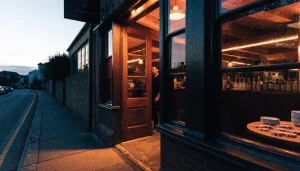
Getting to a Venue: Airport, CBD and Nearby Searches
A venue described as being near Canberra Airport needs to be assessed by its actual address, not by the wording attached to it. “Near” can mean different things depending on whether the trip is on foot, by car or by public transport. Without a named venue and a confirmed address, there is no reliable distance to calculate and no route to assess. A search result that pairs Canberra Airport with pokies does not, by itself, establish that a gaming venue is inside the airport or close enough to count as an airport option.
The same distinction applies to central Canberra. A CBD label may cover a broad area, while a venue’s address would identify where it sits in relation to a chosen destination. The useful comparison is practical: the address, the distance from the intended starting point and the transport route available for that trip. A general claim that a venue is central cannot replace those details.
“Near me” is more dependent on context. The result changes with the searcher’s location, and a venue that is nearby from one part of Canberra may be a different proposition from another. Location permission, the point used as the starting address and the route shown can all affect the apparent proximity. Without those details, “near me” does not identify a fixed place or a consistent travel distance.
North Canberra also requires a specific address before proximity can be judged. The district name narrows the area, but it does not confirm that a particular venue is there. The same care is needed with searches that combine Canberra and Victoria. That wording may reflect an unclear location label or a mistaken association; it is not enough to establish which place is meant.
- Identify the specific venue name
- Confirm the current street address
- Determine the transport route from the starting point
- Match the address consistently across multiple listings
For any location comparison, the minimum useful record is a venue name, its current street address and a route from the relevant starting point. A map estimate can then be checked against the transport mode being considered. A driving route does not establish a walking route, and a location pin does not prove that a venue is accessible from the airport terminal or a central address. If the name or address cannot be matched consistently across listings, the proximity claim remains uncertain.
These distinctions keep airport, central-city and nearby-location searches separate from claims about what a venue offers. A place name can guide an address check, but it cannot confirm a venue, its distance or a transport connection. Until those particulars are established, a result labelled as close to the airport, CBD or northern Canberra is only a location claim—not a usable measure of the journey.
Venue Reporting and Responsible-Gambling Oversight
For anyone comparing Canberra pokies venues, oversight arrangements are a separate question from the games on the floor.
A report published by regionriverina.com.au says that, from 1 July, a venue operating more than 20 gaming machines is required to have a dedicated responsible gambling officer (RGO) on duty whenever those machines are running. The trigger is the number of machines, and the duty is tied to their operating period. It is not described as a general requirement for an RGO to remain on site at all times, regardless of whether gaming machines are operating.
The same report describes a one-month grace period for venues to remove signage and put the RGO arrangements in place. That transition period matters when interpreting a stated requirement: it allows time for changes to be made, rather than establishing that every venue’s arrangements were already in place from the start. The date is given as 1 July, without a year, so it should not be treated as a complete current compliance timetable on its own.

The report also says venues will be required to maintain a gambling incident register. The register is intended to capture details of incidents, including situations where a patron’s behaviour indicates possible gambling harm or that harm is already affecting them. This makes the requirement about more than staffing: it also creates a record of relevant occurrences. The stated description does not specify the form of the register, who may inspect it, or what action follows an entry, so those details should not be assumed.
For a venue assessment, these requirements provide a narrow but useful framework: machine count determines whether the reported RGO threshold is crossed; machine operating hours define when the officer must be on duty; and the register concerns incidents involving indicators of gambling harm. None of those points establishes a venue’s name, location, machine count, or actual compliance. A venue’s own published information or a direct enquiry would be needed to confirm its arrangements.
The word “dedicated” also matters. The reported obligation is for a responsible gambling officer, rather than simply a general statement that staff are present. But the description does not define the officer’s precise duties or guarantee a particular response to an incident. Those limits are material: a staffing requirement and an incident record are oversight measures, not evidence that harm cannot occur.
A claim that a venue is among the best pokies venues in Canberra cannot be established by these rules alone. They describe safeguards and reporting responsibilities, not game quality, player outcomes, or comparative performance. For a practical comparison, the oversight information can be considered alongside other venue-specific details, without treating regulatory requirements as a ranking.
Why ‘24-Hour’ Searches Need Venue-Level Verification
A “24-hour pokies” search expresses an expectation, not proof that a venue’s gaming area is available at every hour. The distinction matters: a venue may have one operating schedule, while access to its pokies may be governed by another. A result that uses all-hours wording does not, by itself, establish either schedule.
The phrase “open now” adds a time-sensitive claim. Search results can be incomplete or out of date, and a general business-hours label may not specify whether the gaming area is operating. For a late-night or early-morning visit, the relevant detail is not simply whether a venue is open, but whether its pokies are accessible at that time.

A precise confirmation should establish the venue’s current operating hours and the hours that apply specifically to its gaming area. It should also clarify whether access changes on particular days or under particular conditions. Without that distinction, “open” can describe the building or another service rather than the activity being sought. A listing is a starting point; direct confirmation from the venue is the more relevant basis for an all-hours claim.
The same care applies to wording such as “24-hour venue.” It may refer to continuous access, a broad service description, or a schedule that is subject to change. Those meanings are not interchangeable. The term needs to be tied to a specific location and gaming area before it can support a decision about visiting.
Canberra pokies opening hours should therefore be treated as venue-specific information, not as a single city-wide schedule. A general statement about availability cannot establish that every location—or any particular gaming area—operates around the clock. Confirmation should be recent and explicit about the hours in question; an old result or an unspecific directory entry does not resolve the point.
There is a practical difference between finding a place described as open and confirming that the intended area is operating. The former may answer a general access question; the latter addresses whether a visit for pokies is possible at that time. Keeping those questions separate prevents a broad label from being mistaken for a verified all-hours schedule.
For searches focused on round-the-clock access, the decisive detail is the venue’s own current confirmation of gaming-area hours. If that confirmation does not clearly establish continuous operation, the “24-hour” description should not be treated as settled.
Crown Searches and the Limits of the Available Information
A Crown name appearing alongside Canberra does not, by itself, establish that a Crown casino or pokies room operates in the city. Nor does the wording confirm that Crown pokies are available at a Canberra venue. These are separate claims: one concerns a name associated with a place; the others concern an operating venue, its facilities and the games it offers. None follows automatically from the others.
The distinction matters when interpreting a result that appears to match a request for Crown pokies in Canberra. A page title, map label or directory entry may repeat those terms without confirming the venue’s identity or what is on its gaming floor. Before treating the association as a visitable location, the venue itself would need to confirm its Canberra address and the relevant facilities. Without that confirmation, a comparison of Crown games in Canberra would have no established local basis.
The same applies to a request for the best pokies room in Canberra. “Best” requires a defined measure, such as location or facilities, and evidence that the rooms being compared exist and offer those features. A Crown reference cannot supply that evidence on its own. No specific room, game selection or comparative ranking can be responsibly attached to it here.
A question about the maximum cash payout on Canberra pokies also cannot be answered from the Crown association. It does not establish a payout ceiling, and a general search label is not a statement of a machine’s terms. Any payout claim would need to identify the relevant venue and machine and be checked against their applicable rules. Without those details, a maximum figure would be guesswork.
The practical boundary is simple: a name linked to Canberra is not proof of a Canberra venue, and a venue claim is not proof of particular games or payout terms. Until the location and those details are confirmed directly, Crown should not be treated as a verified part of the Canberra pokies comparison.
Clubs and Gaming Searches in Central Canberra
A club described as central or associated with Canberra’s CBD is not automatically a confirmed place to play pokies. Search labels can combine a venue type with a broad area, but neither establishes an exact address, whether the venue has gaming machines, or how many it has. Those details need to be checked against the individual venue’s current information.

The same distinction applies to requests for the “best” pokies in central Canberra. Without comparable details about specific venues and their facilities, a ranking would have no measurable basis. A club’s name, central-city wording or general reputation does not establish its machine selection or make it preferable to another venue.
For a practical comparison, separate three questions: whether the location is actually in the central area, whether it is a club, and whether it has pokies. Confirming one does not answer the others. A venue listing or map pin may help establish an address, while the venue’s own information is needed to confirm its facilities. Machine counts should not be inferred from the venue’s size or category.
Self-exclusion is a separate consideration from finding a club. It is a responsible-gambling tool, alongside deposit, loss and session-time limits. The relevant process depends on the setting: a venue’s own arrangements should be checked with that venue, while BetStop applies to Australian-licensed operators and does not bind offshore sites. These are not interchangeable protections.
Searches for Canberra clubs with pokies are therefore best treated as location checks, not as evidence of a ranked list. The CBD label narrows the area being considered; it does not verify a particular club, its machines or its self-exclusion procedure. A specific venue’s address and facilities are the useful points to establish before relying on a central-city description.
Parkes Searches: What Can Be Confirmed
A reference to Parkes alongside Canberra identifies the area being sought, not a confirmed pokie venue. The wording alone does not establish that a particular club, hotel or gaming facility is located there. Without a named venue and reliable location details, the result cannot support a claim that pokies are available in Parkes.
That distinction matters when comparing local options. A result mentioning Canberra may refer to the broader city, while a Parkes label may be a search category, an address detail or simply wording supplied by a listing. None of those possibilities confirms that a gaming venue is physically in the area. A venue name, an address and current information from the venue itself are needed before treating a listing as a usable local option.
“Best” also has no measurable meaning on its own. It could refer to game choice, venue facilities or another preference, but no Parkes-specific comparison is established here. Nor does a general Canberra result show which pokies are available at a particular location. A ranking without confirmed venue details would give a precise appearance to an untested assumption.
The practical check is therefore address-level: confirm that the named venue exists at the stated location and that it provides the gaming facilities being described. If a listing does not identify a venue clearly, it cannot settle whether Parkes has the option being sought. Broad city results should not be treated as evidence for a particular district.
This is a narrow limit, not a claim that no venue exists. Parkes-specific availability remains unconfirmed; an address or label in a result is not enough to turn it into a verified local facility. The same standard applies to claims about a venue’s games: those require details tied to the actual location, rather than a general Canberra description.

Cashless Gaming and the Newcastle Search
Cashless gaming and a Newcastle connection are separate claims. A search result combining Canberra, Newcastle and pokies does not establish that a Canberra venue uses cashless systems, or that a Newcastle venue is connected to one. Those details need to be confirmed for the specific venue; the wording alone is not evidence of an arrangement.
“Cashless” can describe how gaming activity is funded or managed, but it does not identify a venue or explain its operating conditions. Without venue-specific confirmation, it cannot support a comparison between Canberra locations or establish that cashless play is available locally. The same applies to references to Newcastle: the name in a phrase does not demonstrate a shared operator, venue, system or service.
This distinction matters because a location label and a payment arrangement answer different questions. A Newcastle reference concerns place or affiliation; cashless gaming concerns how play is handled at a venue. Treating the terms as one combined fact would turn an ambiguous phrase into a claim about local facilities.
PayID is a separate payment mechanism for transfers through Australia’s New Payments Platform. Its existence does not establish that a Canberra venue offers cashless gaming, nor does it confirm any Newcastle link. It should not be used as a substitute for venue-level information about how gaming is conducted.
For a Canberra-specific assessment, the relevant evidence would need to identify the venue and state its cashless arrangements directly. A Newcastle association would likewise require a clear, independently established connection. Until those details are tied to a particular venue, neither should be presented as a confirmed feature of Canberra’s pokies scene.
Are online pokies legal for Australian players?
Yes, Australians can play on offshore sites that accept them, but companies cannot legally offer real-money online pokies to Australian residents without a domestic licence, and no such licences have been issued. There is no Australian-licensed online casino, and players have no legal recourse in Australia if an offshore casino refuses to pay.
What is the legal age for online gambling in Australia?
You must be at least 18 years old to gamble online in Australia.
Can casinos change the RTP of their games?
Yes, some game providers let casinos choose between multiple RTP settings for the same game, so its return percentage can vary between casinos.
What does “wagering requirement” actually mean?
It is the amount you must bet, usually calculated as a multiple of the bonus, before you can withdraw winnings. For example, a $500 bonus with a 40x requirement means $20,000 in bets; if the requirement applies to the deposit plus bonus, a $500 deposit and $500 bonus at 35x means $35,000 in bets.
Do PayID deposits qualify for bonuses?
Yes, PayID is treated like any other qualifying deposit method at the recommended sites.