
Check Adelaide Pokies Venues Before You Go
A practical way to assess venue status, compare available Adelaide information and distinguish search results from confirmation.
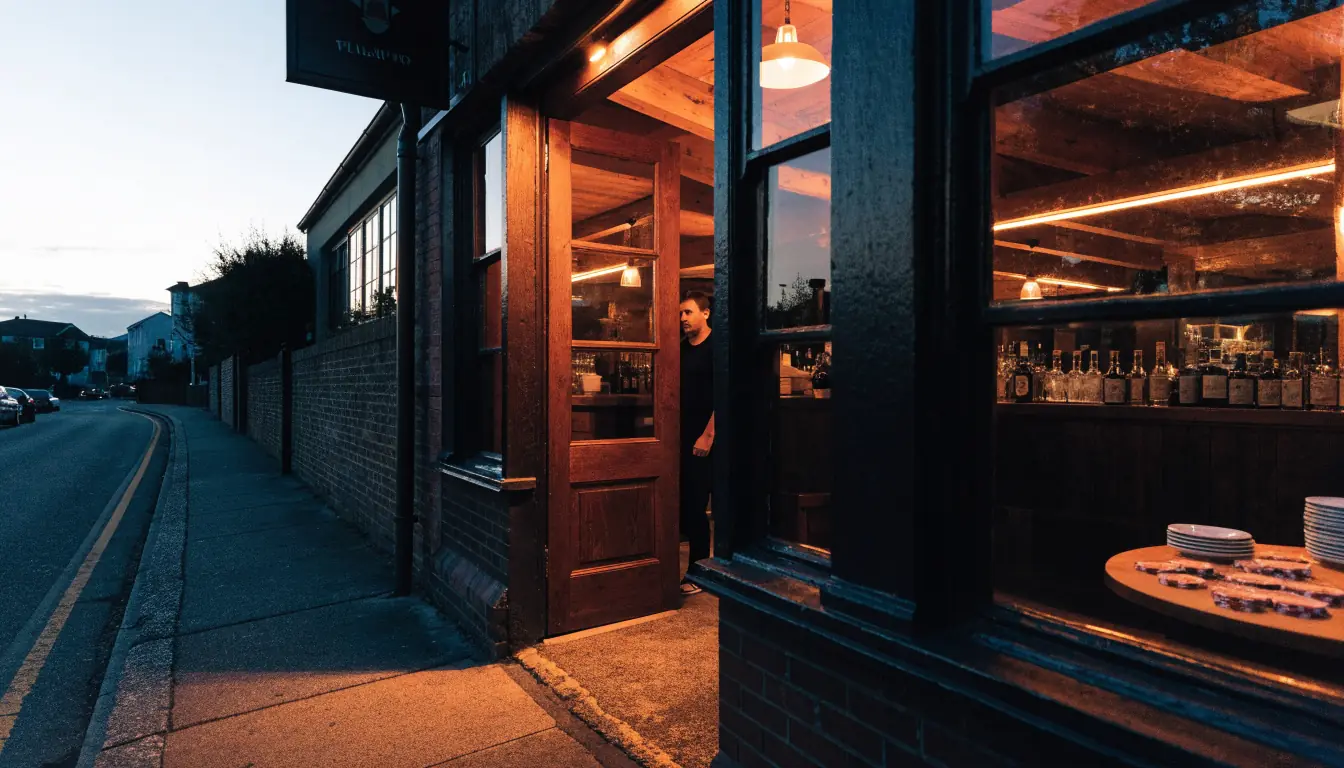
Checking Whether a Venue Is Open
A venue’s general listing and its current opening status are different kinds of information. A page may describe a location, its facilities or its usual trading pattern without confirming that it is open at the time a trip is planned. For anyone checking whether pokies are available in Adelaide now, the useful detail is a current confirmation tied to the specific venue and the intended visit—not simply a result that appears in a search.
The first check should be the venue’s own current information, where available. A dated notice, live status update or clearly stated hours is more relevant than an undated directory entry. If the information does not indicate when it was last updated, it may describe a standard schedule rather than the position on the day. Search-result summaries can also repeat older details, so they are a starting point, not confirmation.
A direct call is the clearest way to resolve uncertainty. The question should be specific: whether the venue is open at the intended time, and whether the area containing pokies is operating then. A venue may have spaces or services with different access arrangements; a general answer about the premises does not necessarily establish that the gaming area is available. If the person answering cannot confirm that detail, the opening status remains uncertain.

This distinction matters most for early-morning and late-night plans. A search for pokies open early, or for a venue open at a particular hour, does not establish that any Adelaide location offers access at that time. Nor does a broad “open now” label necessarily refer to the part of the venue relevant to the visit. The practical check is a current confirmation for the intended time and the specific facility, obtained close enough to departure to remain useful.
Information can also change. A listing may not reflect a temporary closure, a change to access arrangements or a disruption on a particular day. Public holidays and special events can make an ordinary schedule less useful, but the existence and effect of any change need to be confirmed with the venue rather than assumed. An old social post or a copied directory entry is weak evidence of present availability, even when it looks precise.
A reliable check can be kept simple:
- Identify the specific venue rather than relying on a broad Adelaide result.
- Look for information published or updated by that venue.
- Check whether the stated hours apply to the relevant area, not just the premises generally.
- Confirm the intended visit time directly if the information is unclear, undated or inconsistent.
- Recheck before setting out if the earlier confirmation may no longer be current.
The standard is not complicated: the more a plan depends on a particular opening time, the more useful a live confirmation becomes. A general schedule can help frame the question, but it cannot settle whether access is available at the moment of travel. If a venue’s own page and a third-party listing differ, the disagreement is a reason to confirm directly, not a reason to select the more convenient answer.
The same care applies to the word “open.” It can refer to a building accepting customers, a particular service operating, or a gaming area being accessible. Those are not automatically interchangeable. A venue could be operating while a specific facility is unavailable, or a published schedule could describe only part of the premises. Without a clear statement, the broad label is not enough to establish the detail that matters.
Opening information also does not answer questions about the performance of pokies. A venue’s hours, even when current, say nothing about a machine’s payout percentage. Those are separate subjects and require separate evidence; an open-status result cannot be treated as proof of a particular return rate.
For a trip based on a narrow time window, the cost of relying on stale information is straightforward: the journey may be made without the expected access. Checking the venue’s current information and confirming the relevant area before travelling reduces that uncertainty. It does not turn a general listing into a guarantee, but it makes the decision rest on a more useful fact than a search label alone.
What “Best” Can—and Cannot—Mean for Pokies
Choosing pokies sites for Adelaide in 2026 means checking the details that are available before you play. This list highlights each operator’s stated licensing information and, where provided, deposit or payout details.
-
WinSpirit Casino
- License
- Curacao eGaming OGL/2024/923/0383 (Antillephone N.V.)
- Min. deposit
- A$30
WinSpirit Casino lists a Curaçao eGaming licence, OGL/2024/923/0383, issued through Antillephone N.V. Its minimum deposit is A$30.
-
Bizzo Casino
- License
- Curacao Gaming Control Board (TechSolutions Group N.V.)
Bizzo Casino lists a Curaçao Gaming Control Board licence, with TechSolutions Group N.V. named in connection with it.
-
JeetCity Casino
- License
- Curacao eGaming (Dama N.V.)
JeetCity Casino lists a Curaçao eGaming licence through Dama N.V.
-
House of Pokies
- License
- international iGaming licence – jurisdiction not named in the source
- Payout speed
- PayID 1-24 hours
- Min. deposit
- A$30 (PayID from A$10)
House of Pokies lists an international iGaming licence, though the jurisdiction is not named. Its stated PayID payout time is 1–24 hours; the minimum deposit is A$30, or A$10 for PayID.
-
LevelUp Casino
- License
- Curacao eGaming OGL/2023/174/0082 (Dama N.V.)
- Min. deposit
- A$15
LevelUp Casino lists a Curaçao eGaming licence, OGL/2023/174/0082, through Dama N.V. Its minimum deposit is A$15.
-
LuckyVibe
- License
- Curacao Gaming Control Board OGL/2023/176/0095 (Hollycorn N.V.)
LuckyVibe lists a Curaçao Gaming Control Board licence, OGL/2023/176/0095, through Hollycorn N.V.
-
Playfina Casino
- License
- Curacao eGaming (Hollycorn N.V., since 2017)
- Min. deposit
- A$20-30 (depends on the offer)
Playfina Casino lists a Curaçao eGaming licence through Hollycorn N.V., which it states has held the licence since 2017. Its minimum deposit is A$20–30, depending on the offer.
-
JustCasino
- License
- Curacao Gaming Control Board
JustCasino lists a Curaçao Gaming Control Board licence.
-
Vegaz Casino
- License
- Curacao OGL/2024/1335/0780
- Min. deposit
- EUR 20
Vegaz Casino lists a Curaçao licence, OGL/2024/1335/0780. Its stated minimum deposit is EUR 20.
-
Golden Pokies
- License
- Curacao
Golden Pokies lists Curaçao as its licensing jurisdiction.
“Best” is not a single measurable property unless the comparison states what is being measured. For pokies in Adelaide, a useful comparison would need reliable information about the same game under the same conditions. A game’s name, a striking jackpot or a run of recent wins does not establish that it offers a better return.
Return to player (RTP) is one figure often used to compare pokies. It describes a theoretical return across play, not the amount a particular person should expect to receive from a session. A specialist review reports that some game providers give casinos a choice of RTP settings for the same pokie. As a result, the title alone may not identify the setting in use at a particular casino. A percentage attached to a game elsewhere cannot safely be treated as the Adelaide setting without evidence that it applies there.
Even where an RTP figure is available, it does not predict the result of an individual spin or guarantee a particular outcome over a short visit. It is a comparison measure, not a cash-out estimate. Any claim that a pokie is “best paying” therefore needs more than a game name: it needs a documented RTP figure and confirmation that the figure matches the version being compared. Without those details, a ranking would give an appearance of precision without a sound basis.
The mechanics of a spin also matter. A pokie’s random number generator determines its outcome, and each spin is generated independently. A machine that has paid out recently is not thereby due to pay again; a long stretch without a win does not make the next spin more likely to succeed. Past results do not create a reliable forecast for the next result. That is why stories about a “hot” machine or a machine “ready to pay” cannot substitute for comparable technical information.
This distinction is relevant to searches for the best pokies in Adelaide, including CBD searches and broader searches for Adelaide casino pokies. Location may help identify which venue is being considered, but it does not establish the RTP setting of a game there. Nor does the word “best” reveal whether the intended measure is return, game features or personal preference. Those are different criteria and should not be collapsed into one ranking.
A defensible comparison would separate measurable terms from subjective ones. RTP can be compared only when the figure is attributable to the specific setting in use. Features such as themes and bonus rounds may describe how a game plays, but they do not by themselves show that it returns more. Preference can be genuine without being evidence of better performance. A list that mixes these categories may look decisive while answering no consistent question.
The same caution applies to online-pokie wording. A game name or a stated percentage on a page does not establish that the figure applies to a particular Adelaide venue, or that a spin will produce a result matching the percentage. The relevant distinction is between information about a game’s theoretical configuration and the outcome of an individual random event.
There is no sound basis for naming a top-performing Adelaide pokie without verified game-level figures and confirmation of the setting in use. The practical standard is therefore modest: treat a ranking as meaningful only when it states its comparison measure and supports it with information tied to the specific game configuration. Otherwise, “best” is a label, not a calculation.
Distance from the Airport, CBD and Other Adelaide Areas
A proximity search is only useful once its starting point and destination are defined. “Near Adelaide Airport” can mean a place inside the airport, somewhere around its perimeter, or a destination that is simply convenient for a person arriving there. Those are different location questions. A result appearing for an airport-related phrase does not, by itself, establish that pokies are available inside the airport.
The same distinction applies to searches centred on the Adelaide CBD. “Near the CBD” may describe a short walk, a drive from a particular part of the centre, or a wider area considered convenient for a planned trip. Without a specific origin, a distance comparison has no stable meaning. A map result should be checked against the actual address and the point from which the journey would begin, rather than treated as a venue recommendation.

Compare journeys, not labels
For airport-to-city planning, the relevant comparison is between the arrival point and the destination address. For a CBD trip, it is the intended starting point in the centre and the destination. For North Adelaide or another part of the metropolitan area, the same method applies: define the area precisely, then assess the journey using the relevant travel mode. A broad suburb or district name can cover more ground than the phrase “near” suggests.
Travel time and distance are not interchangeable. A route that appears short on a map may not suit the chosen mode of transport, while a longer distance may be straightforward under different conditions. Map estimates can help with initial planning, but they should be read as route information, not proof of what facilities a destination offers. The address remains the key detail to verify before making a trip.
“Pokies near me” is especially dependent on location settings. Results can change with the device’s current position, the area entered into the map, and the way a service interprets “near.” A list produced from one location may not describe what is close to another starting point. Comparing results is more meaningful when the same origin and travel mode are used each time.
Resolve ambiguous place names
A phrase such as “Adelaide, Victoria” needs a location check before it can guide a journey. Adelaide is commonly associated with South Australia, while a search phrase that includes Victoria may reflect a different intended place or an imprecise entry. The state, suburb, postcode and mapped address should agree before distance estimates are relied on. If they do not, the apparent proximity may refer to the wrong area entirely.
Assessing Proximity
-
1
Define Origin
Establish the exact starting point, such as a specific address or airport terminal.
-
2
Identify Destination
Find the exact address of the venue rather than relying on a broad area result.
-
3
Select Travel Mode
Choose the intended mode of transport to determine actual travel time and distance.
-
4
Compare and Verify
Compare the journey on consistent terms and confirm the destination matches the intended place.
The practical sequence is straightforward: establish the exact origin, identify the destination address, select the intended travel mode, and compare the resulting journey on consistent terms. Then confirm that the destination itself matches the intended place. Search wording can suggest an area; it cannot settle a boundary, identify a particular entrance or establish that a venue is there. Those details determine whether “near” means convenient in practice, rather than merely close in a result list.
Adelaide Venues: What Can Be Compared
A useful comparison of Adelaide venues starts with the venue itself, not with a claim that one is the “best pokies venue”. A directory entry can establish that a place is listed as a venue; it does not establish what its gaming area contains or whether its machines suit a particular preference. Those are separate claims and need separate evidence.
Venue-level details can be compared when they are stated clearly and can be checked against current information from the venue. That might include facilities, accessibility, dining options and the way the gaming area is described. Such details help distinguish one venue from another, but they do not measure the pokies or establish that one set of machines offers a better result.
Machine-level comparisons require more specific information. A machine name alone is not enough to establish its settings, and a general statement about a venue’s gaming area cannot stand in for data about individual machines. Where return settings are published, the relevant figure needs to be tied to the particular game and setting, rather than presented as a property of the venue as a whole. Some providers allow casinos to choose among different return settings for the same game, so the game title by itself does not settle the comparison.

The strength of a venue claim also depends on its source and scope. A venue’s own description may be useful for confirming facilities; it is not, by itself, evidence of machine performance. A third-party listing may help identify a venue, but a ranking without a stated method is an opinion, not a measured result. A comparison becomes more useful when each claim is dated, specific and supported by evidence that applies to the venue or machine being discussed.
This distinction matters when several Adelaide venues appear similar in a listing. A broad label such as “large gaming area” does not say how many machines are available, what games are installed or what settings apply. Without those details, the label cannot support a meaningful machine-to-machine comparison. Nor does a longer list of venue features convert convenience or atmosphere into evidence about play.
For a practical shortlist, the comparison can therefore be separated into two columns: venue characteristics and machine information. The first can cover facilities and access arrangements described by the venue. The second should contain only details that identify the relevant games and their applicable settings. If the second column is empty, the venues may still be compared on their facilities, but not on the performance of their pokies. A ranking that blurs those categories gives a precise-looking answer to a question its evidence has not measured.
Do
- Compare venue characteristics using facilities and access details described by the venue.
- Use return settings tied to the specific game and configuration.
Don't
- Use a general venue label like "large gaming area" to compare machine performance.
- Treat a ranking without a stated method as a measured result.
Online Pokies Searches and the Australian Legal Position
Adelaide pokies can refer to land-based venues in the city or to internet play presented as available to people in Adelaide. Those are different activities with different legal positions. A website’s use of Adelaide in its wording does not make its online games part of the local venue market.
Under the Interactive Gambling Act 2001, companies cannot legally provide real-money online pokies to people in Australia without a domestic licence. No such licences have been issued, and there is no Australian-licensed online casino. The same prohibition covers online casino-style games such as slots, poker, blackjack and roulette. A site describing itself as an online casino does not acquire domestic authorisation by accepting Australian customers or displaying Australian currency.
That distinction matters for searches mentioning real money, bonuses or play without a deposit. Such wording describes a promotion or account condition; it does not alter the operator’s legal position. A no-deposit offer is still connected to online casino gambling if it provides access to real-money play or winnings. It should not be treated as a lawful Adelaide venue offer or as evidence that an Australian-licensed service exists.
The Act targets the companies providing prohibited services, not individual players. An Australian player is not subject to a fine or criminal prosecution under this law merely for accessing an offshore casino. That does not make an offshore operator locally licensed, nor does it give a player the protections available through an Australian-licensed online casino. There is no such casino.

The practical financial distinction is important. If an offshore casino refuses to pay winnings, an Australian player has no legal recourse in Australia to compel payment. A displayed bonus or advertised cash-out condition is therefore not equivalent to an enforceable local remedy. The apparent value of an offer cannot be assessed solely by its headline terms when the operator is outside the domestic licensing system.
Land-based searches remain a separate matter: they concern physical venues and their pokies, not online casino accounts. A phrase combining Adelaide with a place name such as Parkes does not, by itself, establish that an online service is local or that a venue is located there. The location wording is not a legal status.
Accordingly, “best pokies” in Adelaide can point to a search for physical play, while online real-money wording points to a service prohibited from being supplied to Australians under the current domestic framework. Bonus language does not bridge that gap. The legal position rests on what the service provides and to whom, not on whether its page calls the offer free, local or available without a deposit.
Online Access, Site Blocking and the Limits of Availability
A page appearing in a search result is evidence that the page was indexed, not that its operator is authorised to provide real-money pokies in Australia. The same distinction applies when a site loads, displays an Adelaide-themed page or presents games as available to local visitors. Access is a technical condition; legal availability is a separate question.
Legal Risk
Under the Interactive Gambling Act 2001, providing real-money online pokies to people in Australia without a domestic licence is illegal; no such licences have been issued.
The Australian Communications and Media Authority (ACMA) enforces the Interactive Gambling Act 2001. As part of that role, it blocks access to illegal offshore gambling sites, and internet service providers must comply with ACMA’s blocklist. A blocked page may therefore be inaccessible through an internet provider, even if its address remains visible in search results or elsewhere online.
The blocklist is not a directory of approved operators. A site that is reachable has not thereby passed a licensing check, and a site that is blocked is not evidence about the status of land-based pokies in Adelaide. For searches that combine online play with Adelaide locations, those distinctions matter: a page mentioning Adelaide central or nearby suburbs does not establish a local venue, local machine or lawful online service.
Nor does an Adelaide label settle what a site offers. Phrases suggesting high-limit play, maximum bets or better-paying pokies are marketing claims unless supported by reliable, specific information. They do not show that the service is available under Australian law. A search result can answer where a page is hosted or what it claims to provide; it cannot, by itself, establish the operator’s legal standing.
The practical limit is that availability can change at the access layer. A page may disappear after blocking, while its listing or a reference to it remains visible. Conversely, being able to open a page does not make the service lawful. ACMA’s enforcement and provider compliance are directed at restricting access to illegal offshore gambling sites, not at certifying every page that remains reachable.

For Adelaide-related online pokies searches, the sound distinction is between information about a physical place and access to an online gambling service. Search wording that pairs “casino” with Adelaide does not convert an offshore website into an Adelaide venue. Location terms, game claims and a working page address are not substitutes for legal authorisation.
Operating Hours and Responsible-Gambling Requirements
A venue’s opening hours and the hours during which its gaming machines operate are related but not identical. A venue can have broader operating hours than its pokies, and a general listing does not establish whether machines are running at a particular time. The phrase “24-hour pokies” therefore needs to be treated as a claim about machine operation, not simply a venue’s doors being open.
A report published by regionriverina.com.au describes a requirement for venues with more than 20 gaming machines to have a dedicated responsible gambling officer (RGO) on duty while those machines are operating. The report says the requirement starts from 1 July and that venues have a one-month grace period to remove signage and introduce RGOs. These details are reported requirements; they should not be read as confirmation of the opening or machine hours of any Adelaide venue.
The same report describes a gambling incident register for recording occurrences, including behaviour indicating that a patron may be at risk of, or affected by, gambling harm. That is a record-keeping obligation, not a timetable. It does not show that a venue operates continuously, that its machines remain available whenever the building is open, or that an RGO is present at any particular Adelaide location.
For hours, the relevant distinction is between a venue’s published schedule and the actual operating period of its gaming machines. A listing that says a club or hotel is open does not, on its own, establish machine availability. Likewise, a responsible-gambling staffing rule tied to machine operation says nothing about when a venue opens or closes.
Responsible-gambling oversight is part of the operating framework rather than evidence of uninterrupted service. The RGO requirement described in the report applies while machines are operating at venues above the stated machine threshold; the incident register concerns the recording of specified occurrences. Neither provision amounts to a promise that pokies are available at all hours.
Accordingly, “open now” and “machines operating now” are separate checks. A venue’s general hours cannot settle the second question, and the reported staffing and recording rules cannot settle either one for a particular Adelaide venue. The operational distinction matters: a door may be open while gaming machines are not operating.
Crown-Related Searches: No Verified Adelaide Venue Details
A search that combines Crown with Adelaide does not, by itself, establish that a Crown venue or a particular pokies room is located in Adelaide. It may reflect a brand name, a broad location label, or information about a different place. Those possibilities should not be collapsed into a venue recommendation.
The useful first check is whether the information identifies a specific Adelaide address and the entity operating there. A page that mentions Crown and pokies without identifying both is not enough to confirm that the machines are available at that location. Nor does a reference to a “pokies room” establish its size, machine selection or current operating arrangements.
The same distinction applies to claims about the best room. “Best” needs a stated basis: for example, a clearly described venue feature that can be checked against another venue. Without that, the label is promotional rather than a comparison. It says nothing dependable about the machines or the terms attached to play.
A maximum cash payout claim also needs precise wording. It should identify what the limit applies to, where it is set out, and whether it concerns a machine, a venue process or another condition. Without those details, a headline figure cannot be treated as a confirmed amount available to a patron. A number without a defined scope is not a payout comparison.
For a sound decision, the evidence should connect the location, the operator and the specific claim. Venue information can establish where a business is; machine information can establish what is offered there; and written payout terms can clarify the scope of any stated limit. One type of detail does not substitute for the others.
The careful reading of Crown-related Adelaide references is therefore narrow: treat them as unconfirmed until they identify an Adelaide venue and support the particular claim being made. This avoids turning a brand association into an assumed local destination, or an unsupported payout figure into a financial expectation.
CBD Clubs and Pokies: Evidence Before Comparison
A club in Adelaide’s central business district cannot be assessed from its category alone. “Club” describes an organisation, not the number or type of pokie machines available, the terms attached to them or the protections in place. Without current, venue-specific information, a ranking would be an order of names without a measurable basis.
A useful comparison separates claims that can be checked from impressions. Venue information should identify the particular club and be current; machine-related claims should specify what is being compared. An advertised game name, a broad claim about choice or a favourable review does not establish that one venue offers better outcomes. Nor does the word “best” supply a common measure. Pokie spins are independent random events, so a result at one machine does not predict the next result.
CBD location is also not evidence of quality or suitability. A central address may help identify an area of interest, but it says nothing about machine settings, venue practices or whether a particular club meets an individual’s needs. Those questions require separate evidence rather than assumptions based on the venue’s name, setting or reputation.
Self-exclusion is a practical consideration for anyone comparing access to pokies. Deposit, loss and session-time limits are also responsible-gambling tools, but their existence in general does not establish that a particular club offers a specific arrangement. Any venue-level claim should be checked directly and understood in its actual terms. BetStop applies only to Australian-licensed operators; it does not bind offshore sites. It should not be treated as a substitute for checking how a land-based venue handles its own exclusion arrangements.
A defensible CBD comparison therefore needs verifiable details about the named venue and the precise feature being assessed. If those details are not available, the accurate result is no ranking—not an inferred winner. That distinction matters because a list can look decisive while relying on nothing more than proximity, promotional language or an untested reputation.
Cashless Payments and the Newcastle Search Detour
“Cashless” can refer to different things. In an Adelaide venue context, it may mean asking whether a club or other venue offers a cashless way to use its pokies. That is a venue-specific payment question; it does not establish that a particular payment method is available at any Adelaide location.
PayID is a transfer method, not a cashless-pokies feature by definition. It uses an alias—such as an email address, mobile number or ABN—to direct a transfer through the New Payments Platform. Whether a venue accepts a particular payment method must be checked with that venue rather than inferred from the word “cashless”.
There is also a separate online-gambling use of PayID. A specialist review reports that some Australian banks, including members of the Big Four, occasionally block PayID transfers to known gambling merchants. That account describes a reported banking practice, not a guarantee that a transfer will succeed or a permanent rule applying to every bank and transaction.

Payment support does not establish that an online gambling service is lawful in Australia, licensed here or transparent about its games. The Interactive Gambling Act 2001 prohibits operators from providing real-money online casino games to people in Australia, and no Australian-licensed online casino is available. A payment option cannot change that position.
The Newcastle wording is a separate geographic request, not evidence of a link between Newcastle and Adelaide venues. A search combining the two place names may reflect a comparison or a mixed-up location, but it cannot establish that a Newcastle venue operates in Adelaide or that the same pokie or payment arrangements apply in both places. For a local cashless-payment question, the useful evidence is the specific Adelaide venue’s own current information.
Are online pokies legal for Australian players?
Yes, Australian players can legally play on offshore sites that accept them, but there are no Australian-licensed online casinos. The law targets operators offering real-money online pokies without a domestic licence, and no such licences have been issued; players have no legal recourse in Australia if an offshore casino refuses to pay.
What does “wagering requirement” actually mean?
It is the amount you must bet, expressed as a multiple, before bonus winnings can be withdrawn. For example, a $500 bonus with a 40x requirement means $20,000 in bets; if the requirement applies to a $500 deposit plus a $500 bonus at 35x, it means $35,000 in bets.
Do PayID deposits qualify for bonuses?
Yes, PayID is treated like any other qualifying deposit method at the sites that recommend it. Check the bonus terms for the applicable wagering requirement and any withdrawal limits.