
Check the venue before you make the trip
This guide separates opening-status checks from claims about payouts, CBD access, online offers and payment options.
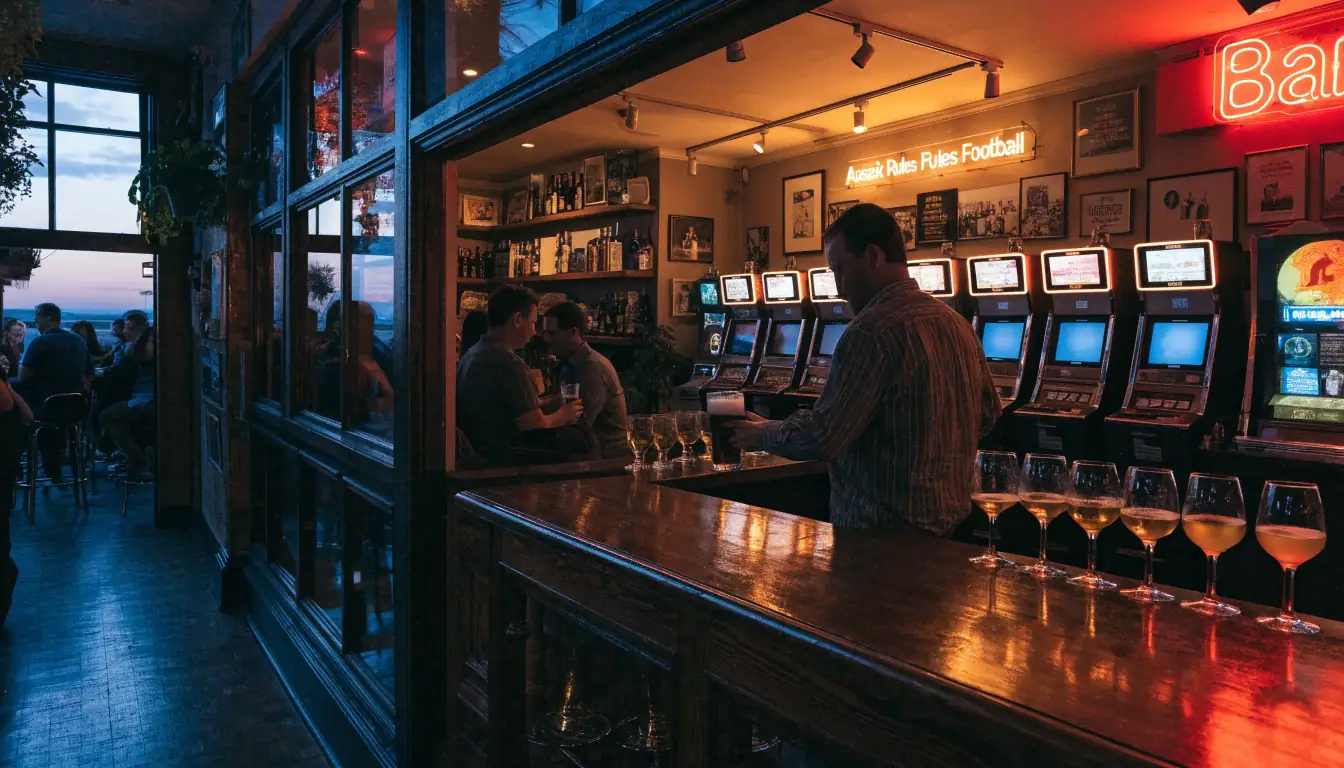
Checking Whether a Perth Venue Is Open
A venue’s status can change after a listing is updated. For anyone checking whether a Perth pokie venue is open at a particular moment, the useful distinction is between a general indication of operating hours and confirmation that the venue is admitting patrons now. A result marked “open” may not reflect a temporary closure, a changed schedule or a restriction affecting part of the premises.
The most direct check is to contact the venue using a current phone number or contact channel published by the venue itself. The question should be specific: whether the premises are open at the intended time, and whether the area with pokies is accessible. A hotel, club or other venue can have several facilities with different access arrangements; the fact that one part is operating does not establish that gaming facilities are available.
An official website or current social account can provide another check, particularly where a venue posts notices about temporary changes. A dated notice is more useful than an undated summary. If the status matters for a trip, relying on one source is less dependable than comparing a current official notice with direct confirmation. A map entry can help identify a possible venue, but its status label is not a guarantee of immediate access.

What “open now” needs to establish
“Open” can mean that a building is open to the public, that a particular service is operating, or that a specific area is accessible. These are not interchangeable. A venue may be open for dining or accommodation while its pokie area is unavailable; conversely, a general listing may omit conditions that apply to entry. The relevant check is therefore not just whether the address is marked open, but whether the intended facility is operating and accessible at the time of arrival.
This matters especially for searches about early or late access. A result for a venue that has previously opened early, or stayed open late, does not confirm its status on a particular day. Search results can combine old information, standard schedules and user-submitted updates. Those details can be useful starting points, but they should not be treated as live confirmation.
A practical check has three parts:
- Confirm the date and approximate arrival time with a current venue contact.
- Ask whether the pokie area, rather than only the wider premises, is open to patrons.
- Check for any notice that could affect access, then rely on the most recent direct information available.
No single online label resolves every part of that check. If the venue cannot be reached and its own channels show no current update, the status remains uncertain. That is a reason to avoid treating a map result or an old review as confirmation, not a reason to infer that the venue is open or closed.
Status is not a payout measure
Opening information answers a narrow operational question: whether a venue or a particular area is accessible at a given time. It does not establish how a pokie performs, what return setting applies, or what a player might receive. A venue being open now is not evidence about payout percentage; those are separate questions and require different information.
The same separation applies to descriptions such as “popular,” “busy” or “open late.” None confirms the return setting of a machine. A current status check can help prevent an unnecessary journey, but it cannot establish the financial terms of play. Those should not be inferred from opening notices, venue listings or the number of people reported to be present.
For a current visit, the most defensible conclusion comes from recent, venue-specific confirmation about access to the relevant area. A broad listing can point toward a check; it cannot replace one. When the available status information conflicts, the more recent direct confirmation should carry greater weight than an undated directory entry.
What “Best-Paying” Can—and Cannot—Mean
Choosing pokies to play in Perth means checking the practical details that matter before you sign up. This list offers a concise reference to the licensing and payment information available for each operator.
-
WinSpirit Casino
- License
- Curacao eGaming OGL/2024/923/0383 (Antillephone N.V.)
- Min. deposit
- A$30
WinSpirit Casino lists a Curacao eGaming licence issued to Antillephone N.V. Its minimum deposit is A$30.
-
Bizzo Casino
- License
- Curacao Gaming Control Board (TechSolutions Group N.V.)
Bizzo Casino is associated with a Curacao Gaming Control Board licence held by TechSolutions Group N.V.
-
JeetCity Casino
- License
- Curacao eGaming (Dama N.V.)
JeetCity Casino lists a Curacao eGaming licence associated with Dama N.V.
-
House of Pokies
- License
- international iGaming licence – jurisdiction not named in the source
- Payout speed
- PayID 1-24 hours
- Min. deposit
- A$30 (PayID from A$10)
House of Pokies lists an international iGaming licence, though the jurisdiction is not named in the available information. PayID payouts are listed at 1–24 hours; the minimum deposit is A$30, or A$10 when using PayID.
-
LevelUp Casino
- License
- Curacao eGaming OGL/2023/174/0082 (Dama N.V.)
- Min. deposit
- A$15
LevelUp Casino lists a Curacao eGaming licence issued to Dama N.V. Its minimum deposit is A$15.
-
LuckyVibe
- License
- Curacao Gaming Control Board OGL/2023/176/0095 (Hollycorn N.V.)
LuckyVibe lists a Curacao Gaming Control Board licence associated with Hollycorn N.V.
-
Playfina Casino
- License
- Curacao eGaming (Hollycorn N.V., since 2017)
- Min. deposit
- A$20-30 (depends on the offer)
Playfina Casino lists a Curacao eGaming licence associated with Hollycorn N.V., dating to 2017. Its minimum deposit is A$20–30, depending on the offer.
-
JustCasino
- License
- Curacao Gaming Control Board
JustCasino lists a Curacao Gaming Control Board licence.
-
Vegaz Casino
- License
- Curacao OGL/2024/1335/0780
- Min. deposit
- EUR 20
Vegaz Casino lists a Curacao licence and has a minimum deposit of EUR 20.
-
Golden Pokies
- License
- Curacao
Golden Pokies lists a Curacao licence.
“Best-paying” sounds like a ranking based on a stable cash return. For pokies, that interpretation needs qualification. A return-to-player setting, or RTP, describes a game’s stated return configuration; it does not specify what an individual session will pay. Nor does a game name, by itself, establish the setting used at a particular casino.
A specialist review reports that some game providers give casinos a choice of RTP settings for the same pokie. As a result, the version available at one casino may have a different return percentage from the version offered elsewhere. That is a reason to check the setting attached to the specific game and venue, rather than transferring a figure found for the same title in another context. It is not evidence that any particular Perth venue uses a particular setting.
Even a confirmed RTP figure is not a forecast of the next result. Each spin is generated separately by a Random Number Generator, so previous outcomes do not determine the next one. A run of wins does not establish that a game is about to pay less; a run of losses does not establish that a payout is due. The stated return setting and the result of an individual spin answer different questions.
That distinction limits what “best pokies in Perth” can responsibly mean. Without comparable, venue-specific RTP information, a ranked list of Perth games would imply a precision that the available details do not support. A title’s reputation, popularity or presence in a casino does not demonstrate that it has a higher setting there than another title. Naming a game as the best-paying option without evidence would turn an unverified claim into a money decision.
The same caution applies to searches for Perth casino pokies, whether the intended venue is in the city or elsewhere. A game’s return cannot be inferred from its location, and a CBD address would not establish the RTP configuration. For a meaningful comparison, the relevant information would need to identify the game and the applicable setting at the venue being considered. A provider’s general information, or a figure associated with another casino, cannot fill that gap.
There is also a difference between a theoretical return and a promised personal result. RTP does not guarantee that a player will receive a corresponding amount during a visit, nor does it set a minimum payout for a particular session. The independent nature of spins means that short-term results can vary; the setting does not remove that uncertainty. Treating a percentage as money owed back would confuse a game specification with a cash-out commitment.
The phrase “best-paying pokies in Perth” therefore works as a request for comparable information, not as proof that a verified winner can be named. For any game under consideration, the useful checks are whether a return setting is stated and whether that information applies to the version at the relevant casino. If either point is unclear, a precise ranking cannot be built from the game title alone.
This approach does not identify the highest-return pokie in Perth, Perth’s CBD or any other local area. It separates what a return setting can indicate from what it cannot: a configuration may differ between casinos, while no setting predicts the outcome of an individual spin. That is a narrower answer than a leaderboard, but it does not mistake an attractive label for a verified comparison.
Perth Venues: Machine Data and Responsible-Gambling Duties
A venue’s machine count is an operational detail, not a measure of game quality. It cannot establish which pokies are available, what return setting applies to a particular game, or whether one venue offers better value than another. Nor does a larger machine floor, by itself, make a venue the best choice. Those conclusions require information about specific games and settings; a count alone cannot supply it.
Machine numbers do matter for a separate reason: they can determine which responsible-gambling duties apply. A report published by regionriverina.com.au describes a requirement taking effect from 1 July: venues operating more than 20 gaming machines are to have a dedicated responsible gambling officer (RGO) on duty whenever those machines are running. The threshold is strictly more than 20, so the stated duty is tied to the venue’s machine total and operating period, not to a particular patron or individual pokie.
The same report describes a one-month grace period for venues to remove signage and put the RGO arrangement in place. That transition period is part of the reported change, not a standing allowance that can be assumed to apply indefinitely. For anyone comparing Perth venues, the useful distinction is between a published requirement and evidence about a particular venue’s present arrangements. A general account of the rule does not confirm that a named venue meets it.

The report also describes a gambling incident register that venues will be required to maintain. It is intended to record occurrences, including situations in which a patron’s behaviour suggests they may be at risk of gambling harm or already affected by it. This makes the register an operational safeguard: it concerns how a venue records incidents, rather than what a pokie pays or whether a machine is more favourable than another.
These duties should not be confused with public machine-performance data. A machine count can help establish whether the reported RGO threshold is relevant, but it does not reveal a game’s return-to-player setting, its recent results, or a player’s likely outcome. Each spin remains random; no venue-level total converts it into a forecast. Likewise, an incident register is not a rating system and does not rank venues by safety or quality.
For a Perth venue comparison, the sound approach is to separate three questions: the number of machines, the safeguards described for the venue, and the characteristics of any individual game. Evidence for one does not answer the others. A venue may have a substantial machine floor without that fact saying anything about the returns available, while a statement about an RGO duty does not establish that every operational detail has been independently checked.
Responsible-gambling measures are relevant to venue operations, but they are not a guarantee against harm. A dedicated officer and recorded incidents provide defined responsibilities and documentation; they do not turn gambling into a predictable financial decision. The practical value of the information is narrower and more useful: it identifies what a venue is expected to have in place under the reported requirements, while leaving game performance and individual outcomes as separate questions.
Getting to a Venue Near Perth Airport or the CBD
A venue described as “near Perth” may be near the metropolitan area rather than close to a particular starting point. For a useful comparison, the origin and destination need to be precise: an airport terminal is not interchangeable with the wider airport precinct, and “the CBD” can refer to different points within the central area. A result’s label alone does not establish how long the trip will take.
The same distinction matters for searches involving North Perth, Perth Central or a venue said to be near the airport. These names can narrow a location, but they do not provide a confirmed street address or show whether the route is practical. A map pin, where available, should be checked against the venue’s own current listing before travel is planned. A pin placed on a broad area rather than an entrance may not represent the actual destination.
Compare routes, not labels
Distance can mean a straight-line measurement, a road route or the distance from a particular entrance. Those measures are not equivalent. A location that appears close on a map may require a longer road journey, while a route estimate can change with the selected start point and travel method. The relevant comparison is the route from the exact point of departure to the confirmed venue entrance.

For an airport trip, the terminal or other pickup point matters. For a CBD trip, the departure address matters; “central Perth” is not a single point from which every journey can be measured. A route should therefore be checked using the specific origin and destination, with the intended travel mode selected. Without those details, a claim that a venue is the closest option has no consistent basis.
Search wording can also produce locations outside the intended area. “Perth” may refer to Perth in Western Australia or Perth in Victoria, while a phrase such as “near Perth” may be interpreted broadly. A result connected with Parkes should be checked by its full address and state rather than assumed to be in Perth. Confirming the suburb and state prevents a place-name match from becoming a costly detour.
What to confirm before setting out
A location check is most useful when it establishes three things: the venue’s exact address, the entrance to use and the route from the actual departure point. If any of those details differ between a map listing and the venue’s own information, the discrepancy should be resolved before relying on the route. Travel estimates are planning aids, not proof that a venue is at the location implied by a search result.
“Near me” results depend on the device’s location settings and on the point from which the search is made. A result generated at home will not necessarily be the nearest option to an airport terminal or a CBD address. If location access is unavailable or inaccurate, the displayed order should not be treated as a distance ranking.
Do
- Confirm the exact street address and entrance.
- Set the correct origin point in your route planner.
- Use the venue's own current listings for confirmation.
Don't
- Rely on "near me" results or broad location labels.
- Assume a map pin represents the actual entrance.
- Treat a general city name as a guarantee of proximity.
The practical standard is straightforward: confirm the address, set the correct origin, and assess the route rather than relying on a nearby label. That method applies whether the starting point is Perth Airport, the CBD, North Perth or another place in the metropolitan area. It also keeps a location result separate from claims about a venue’s machines, facilities or suitability.
Crown Perth: What This Guide Can Verify
Crown Perth is a named venue, but the name alone does not establish what a particular pokie offers. A venue label cannot confirm a machine’s title, return setting, jackpot, room location or cash-out procedure. Those are separate details, and each requires evidence tied to the specific machine or venue policy.
That distinction matters when assessing claims about pokies at Crown Perth. A statement that a game is available at a venue is not, by itself, evidence of its return percentage or likely result. Nor does a game’s name establish that it is installed there now. Machine availability and machine terms are not interchangeable facts.
The same separation applies to descriptions such as “best pokies room”. “Best” has no fixed meaning unless the comparison states its measure. It might refer to room design, machine selection, access or another feature; none of those descriptions proves better returns. Without a defined measure and evidence for it, the phrase is promotional language, not a financial comparison.
A maximum cash payout is a different question again. The amount cannot be inferred from the venue’s name, from a jackpot headline, or from a machine’s advertised prize. A headline prize and the way a payment is made are not necessarily the same thing. Any claim about a cash maximum needs to identify the applicable machine or policy and explain the conditions attached to it. Without those details, the figure cannot be treated as a confirmed amount available to a patron.
The useful unit of analysis is therefore the specific claim, not the venue name. A machine-level claim should identify the game and the relevant setting. A room claim should define what is being compared. A payout claim should state what amount is payable, in what form and under what conditions. If those elements are absent, the claim cannot support a reliable comparison between Crown Perth and another venue.
This is not a technical distinction for its own sake. A large advertised prize may attract attention, but it does not establish the cash a person can collect or the likelihood of receiving it. A room described as having a strong selection may still provide no information about individual machines. In accounting terms, an unqualified headline is not a payable balance.
Crown Perth should consequently be treated as a venue name, not as evidence for a ranking of its pokies, a “best” room, or a maximum cash payout. Those conclusions require particular details, each assessed on its own terms. The name supplies the subject of the question; it does not supply the answer.
Online Pokies, Deposits and the Cost of Bonus Terms
Real-money online pokies cannot be lawfully offered to people in Australia by a domestic operator: the Interactive Gambling Act 2001 prohibits the service, and no Australian online-casino licences have been issued. That legal position matters before any deposit or bonus calculation. Offshore sites may accept Australian customers, but if one withholds winnings, there is no legal recourse in Australia to recover them.
Legal Risk
Real-money online pokies cannot be lawfully offered by domestic operators in Australia; offshore sites may result in no legal recourse for recovering withheld winnings.
A displayed bonus is not the same as withdrawable money. Its cost depends on the conditions attached to it, particularly the wagering requirement: the total amount that must be bet before bonus-related winnings can be withdrawn. A specialist review has suggested treating a requirement of 35x or less as a lower threshold and one above 40x as punishing. These are that review’s assessment, not an Australian regulatory standard or a guarantee about any offer.
The arithmetic shows why the multiplier matters. Under an example reported by a specialist review, a $500 bonus with a 40x requirement means $20,000 in required bets before winnings can be withdrawn. If the requirement applies to the combined $500 deposit and $500 bonus, the calculation is $1,000 multiplied by 35, or $35,000 in bets. The headline amount is therefore a poor measure of the offer’s usable value: the turnover condition determines how much play is required first.
“No deposit” changes the amount paid upfront, not necessarily the conditions for withdrawing winnings. The terms may still set a wagering requirement or restrict cash-out. A free-spin offer may also cap the winnings eligible for withdrawal, according to a specialist review. Without the complete terms, the apparent value cannot be converted into a reliable final amount.
The same calculation discipline applies to maximum-bet claims. A higher permitted stake does not remove a wagering requirement or improve the legal position. It changes the pace at which money can be lost, while each spin remains an independent random event. A bonus that requires substantial turnover can therefore carry a material cash cost even when the initial deposit is small.

Withdrawal conditions need checking alongside the bonus terms. A specialist review reports that identity checks before a first withdrawal can require a photo of identity documents and proof of address, and may also involve a selfie holding the identity document. These requirements can delay access to winnings until verification is complete. The documents required and the process should be established before any deposit; a bonus figure does not account for either.
BetStop is a self-exclusion scheme for Australian-licensed operators. Because no Australian online-casino licences have been issued, it does not bind offshore casino sites. It should not be treated as a safeguard against access to those sites or as evidence that an offshore offer is authorised.
Venue Hours and the Limits of “24-Hour” Searches
A venue’s regular opening hours and a claim of continuous operation are different things. A schedule may show when a venue normally opens and closes; “open around the clock” makes a stronger claim, covering every hour rather than a late closing time. One does not establish the other.
The same distinction applies to pokies. A venue may be open while particular facilities are unavailable, or its operating schedule may change. A general venue-hours listing therefore does not, by itself, establish that pokies are available throughout those hours. The useful detail is the schedule for the relevant venue and facility, not a broad label detached from its conditions.
Understanding "24-Hour" Access
A "twenty-four-hour" label may refer to the business as a whole, a specific service, or a facility. It does not guarantee that the pokie area specifically is accessible at every moment, as schedules can change or specific facilities may be unavailable.
Regular hours also need context. A timetable may vary by day, and special dates can be treated differently from ordinary operating days. A schedule without a clear date or day-of-week reference is less useful for planning than one that states when it applies. Where several pages give different hours, the one maintained by the venue is the appropriate point of comparison; copied listings can retain old information after a change.
“Twenty-four-hour” wording deserves particular care because it can be read as a promise of uninterrupted access. It may refer to a business, a service, or a facility, and those are not interchangeable. The wording should identify what remains available, and whether any exceptions apply. Without that distinction, the label answers less than it appears to.
For Perth, a regular-hours decision should rest on a venue’s published timetable, read for the relevant day and facility. A continuous-operation claim should be supported by an explicit statement that the venue and pokies operate without a daily closure, rather than inferred from a late finish or a generic listing. Neither type of information should be converted into a blanket claim about other venues.
That is the practical limit of a “24-hour” description: it concerns a stated operating pattern, not a guarantee that every part of a venue is accessible at every moment. Regular opening hours are a timetable; continuous operation is a separate condition. Keeping those meanings apart prevents a late-night schedule from being mistaken for all-day availability.

Pokies in Perth’s CBD: What Is and Is Not Confirmed
A club’s location in Perth’s central business district does not, by itself, establish that it has pokies. Nor does a venue description using the word “club” confirm machine availability, the number of machines or the terms under which they can be used. Those are venue-specific details, not consequences of being in the CBD.
The same distinction applies to claims about the “best” pokies in the area. A location label cannot establish which games are installed or how they perform. Each pokie spin is an independent random event determined by a Random Number Generator; a venue’s CBD address is not evidence of a better outcome. A list presented as a ranking would need support for both the games named and the basis of comparison.
For searches about Perth clubs and pokies, the useful checks are therefore factual and specific: whether a named club confirms that pokies are available, and whether its own published information supports any further claim about its facilities. A general CBD description cannot substitute for those details. Without them, naming venues or assigning machine counts would create precision without a basis.
Self-exclusion is a responsible-gambling tool, alongside deposit limits, loss limits and session time limits. Its relevance is practical: it is an option for restricting gambling participation, not a way to identify which CBD clubs operate pokies. No particular venue’s enrolment procedure or coverage follows from the existence of self-exclusion as a tool, so those details should not be assumed.
- Confirm the named club actually has pokies available.
- Verify the machine count via the venue's published information.
- Establish if the venue supports a specific self-exclusion process.
- Check for official confirmation of the venue's facilities.
For anyone considering self-exclusion, the distinction between a general safeguard and a venue-specific arrangement matters. A statement that a venue supports a particular process needs to come from that venue or an applicable official source. A broad reference to self-exclusion does not establish how a restriction is requested, how it takes effect or which locations it covers.
The CBD label can narrow a location question, but it cannot answer a venue question. Claims about clubs, machines and exclusion arrangements need to be assessed separately, against information that actually identifies the venue and the particular facility or safeguard. That leaves a more reliable picture than treating “Perth CBD” as proof of availability, quality or access.
Perth, Australia: Jurisdiction Matters
Perth is in Western Australia; South Australia is a separate state. A reference to South Australian pokies does not identify a Perth venue, and the wording alone cannot establish where a venue is, whether it is open, or what machines it has. State names matter when interpreting local information, but they do not change the national age threshold for gambling.
The legal age for gambling in Australia is 18, including for online pokies. That age requirement applies nationally. It should not be confused with the separate rules governing companies that provide gambling services: under the Interactive Gambling Act 2001, offering real-money online casino games to people in Australia is prohibited without a domestic licence, and no Australian online casino licences have been issued.
The Australian Communications and Media Authority (ACMA) is the principal domestic regulator enforcing that Act. Its role concerns the national framework, not confirmation of a particular Perth or South Australian venue’s machines, opening status or local conditions. A search referring to one state therefore cannot serve as evidence about a venue in another.

The distinction is practical: Perth information belongs to Western Australia, while South Australian venue details would need to be assessed in their own location context. Neither state label changes the national age rule or turns prohibited online casino provision into a locally authorised service. For jurisdiction questions, the relevant checks are the place being discussed and whether the claim concerns a physical venue or an online service; those are different matters, not interchangeable descriptions.
Cashless Play and the Limits of PayID Information
Cashless play at a Perth venue and PayID are separate questions. A venue may have ways to make payments without cash, but a PayID option does not establish that its pokies accept cashless payments. Nor does it confirm which machines are available or how they operate.
PayID is an alias facility on Australia’s New Payments Platform (NPP). It lets a transfer be addressed using an email address, mobile number or Australian Business Number (ABN), rather than relying on bank-account details as the identifier. The NPP is supported by all major banks, and transfers through it use end-to-end encryption. Those are features of the payment network, not information about a particular Perth venue.

That distinction matters when assessing claims about cashless pokies. A payment method can describe how funds move between accounts; it does not show whether a venue has cashless facilities, whether a specific pokie accepts a payment, or what conditions apply to using it. Venue-level confirmation would need to come from the venue itself.
PayID support also says nothing by itself about licensing, game fairness or return-to-player settings. Those are separate matters, and a bank-transfer alias cannot verify them. Treating payment availability as proof of any of those attributes would attach conclusions to a technical feature that does not support them.
For searches linking Perth with Newcastle, the city name does not change what PayID can establish. It remains a transfer method using an alias, not a directory of venues or a record of their machines. Cashless arrangements must be confirmed independently for the relevant venue; PayID’s role is narrower.
What is the legal age for online gambling in Australia?
You must be at least 18 to gamble online in Australia.
What does “wagering requirement” actually mean?
It is the amount you must wager before bonus winnings can be withdrawn. For example, a 40× requirement on a $500 bonus means $20,000 in bets; if it applies to a $500 deposit plus a $500 bonus, the total is $40,000.
What is the cost-benefit calculation of casino promotions?
Compare the bonus with the wagering required, any cash-out cap on free-spin winnings, and any withdrawal limits. For example, a $500 bonus with a 40× requirement entails $20,000 in bets, while a 35× requirement on a $500 deposit plus a $500 bonus entails $35,000.
Can casinos change the RTP of their games?
Some game providers allow casinos to choose among different RTP settings for the same game. Check the setting for the specific game at the casino, because the same title can have different return percentages at different casinos.