
Check the details before calling a stay a casino hotel
It distinguishes casino properties from nearby accommodation and identifies which amenities and booking terms the available information cannot confirm.

Hotel Stays: What the Available Information Can—and Cannot—Confirm
A casino hotel stay is a specific product: accommodation sold as part of, or directly by, a casino property. The label alone does not establish who operates the hotel, whether rooms are on the casino site, or whether a room rate includes any casino-related benefit. Those details determine what is actually being purchased.
For Tasmania, a property-level comparison needs a named venue and current booking terms. Without those, there is no reliable basis for describing a particular casino hotel, room category or package as available. A general reference to a casino and a hotel in the same area is not enough to treat them as one property. That distinction matters if the advertised benefit depends on being a hotel guest rather than simply staying nearby.
Read the room rate as a set of terms
A headline rate is not the final cost. Before comparing casino hotel offers, the relevant figure is the payable total for the selected dates and room, with mandatory charges included. The booking conditions should identify whether payment is due at reservation or later, whether the amount can change, and what happens if the booking is cancelled or altered. If those terms are unclear, the apparent deal cannot be assessed on price alone.
Choosing an online casino for use in Tasmania calls for attention to the details available about each operator, including its stated licensing information and any published payment terms. Use this list as a starting point and check that the operator is suitable for you before signing up.
-
WinSpirit Casino
- License
- Curacao eGaming OGL/2024/923/0383 (Antillephone N.V.)
- Min. deposit
- A$30
WinSpirit Casino lists a Curacao eGaming OGL/2024/923/0383 licence issued through Antillephone N.V. Its stated minimum deposit is A$30.
-
Bizzo Casino
- License
- Curacao Gaming Control Board (TechSolutions Group N.V.)
Bizzo Casino lists a licence from the Curacao Gaming Control Board, with TechSolutions Group N.V. identified.
-
JeetCity Casino
- License
- Curacao eGaming (Dama N.V.)
JeetCity Casino lists a Curacao eGaming licence and identifies Dama N.V.
-
House of Pokies
- License
- international iGaming licence – jurisdiction not named in the source
- Payout speed
- PayID 1-24 hours
- Min. deposit
- A$30 (PayID from A$10)
House of Pokies lists an international iGaming licence, though the source does not name the jurisdiction. Its stated PayID payout speed is 1–24 hours; the minimum deposit is A$30, or A$10 with PayID.
-
LevelUp Casino
- License
- Curacao eGaming OGL/2023/174/0082 (Dama N.V.)
- Min. deposit
- A$15
LevelUp Casino lists a Curacao eGaming OGL/2023/174/0082 licence issued through Dama N.V. Its stated minimum deposit is A$15.
-
LuckyVibe
- License
- Curacao Gaming Control Board OGL/2023/176/0095 (Hollycorn N.V.)
LuckyVibe lists a Curacao Gaming Control Board OGL/2023/176/0095 licence, with Hollycorn N.V. identified.
-
Playfina Casino
- License
- Curacao eGaming (Hollycorn N.V., since 2017)
- Min. deposit
- A$20-30 (depends on the offer)
Playfina Casino lists a Curacao eGaming licence through Hollycorn N.V., which it says has been in place since 2017. Its minimum deposit is A$20–30, depending on the offer.
-
JustCasino
- License
- Curacao Gaming Control Board
JustCasino lists a licence from the Curacao Gaming Control Board.
-
Vegaz Casino
- License
- Curacao OGL/2024/1335/0780
- Min. deposit
- EUR 20
Vegaz Casino lists a Curacao OGL/2024/1335/0780 licence. Its stated minimum deposit is EUR 20.
-
Golden Pokies
- License
- Curacao
Golden Pokies lists a Curacao licence.
The room description also needs to be specific. Room type, occupancy, bedding, included services and any stated restrictions should match the reservation details. A package name is not a substitute for an itemised account of what comes with the stay. If an offer refers to a casino benefit, its eligibility, redemption method and expiry conditions belong in the calculation; a benefit with conditions is not equivalent to cash off the room bill.
Property identity is just as important. The booking should make clear which business is responsible for the accommodation and which one provides any separate casino offer. If the hotel and casino are operated independently, a benefit advertised by one may not be honoured by the other unless the terms say so. Proximity, shared branding or a photograph of gaming facilities does not settle responsibility.
Keep accommodation hours separate from casino hours
A hotel’s check-in and check-out times govern the room booking. Casino operating hours govern access to gaming areas. They are separate operational details, so one cannot be inferred from the other: a room reservation does not, by itself, establish that a casino is open at the time of arrival, and a casino’s stated hours do not establish when a room can be occupied.
For a stay tied to a particular visit, both schedules need to be checked for the relevant date. Special opening arrangements, maintenance or changes to service can affect a planned itinerary, while the accommodation booking may remain unchanged. Any package that depends on access at a particular time should state that condition plainly.

The same care applies to wording such as “casino hotel deal”. It may describe a room discount, a bundled service or simply accommodation associated with a casino. The practical value depends on the final room cost and the terms attached to every included component, not on the label. A lower advertised figure can be a poor comparison if it requires conditions that do not fit the intended stay.
A useful comparison records the property, room, dates, total payable price, cancellation terms and the precise contents of any package in one place. Where one of those fields cannot be established, the offer remains incomplete for decision-making purposes. A Tasmanian stay should therefore be judged from the actual property listing and its booking conditions, rather than from a broad description that makes a hotel and casino sound like a single guaranteed product.
Poker Rooms, Tournaments and Gym Searches
A poker room, a scheduled tournament and a gym are three different facilities or services. A listing for one does not establish the presence of the others, and a general casino description is not evidence that any particular facility is available at a Tasmanian venue.
For poker, the key distinction is between a dedicated room for in-person play and poker offered as part of a special event. A room listing should identify where play takes place and whether it operates as a regular facility. A tournament listing should specify the event format, registration arrangements, schedule and any entry conditions. Without those details in a current venue announcement, a tournament should not be treated as confirmed. A poker room’s existence would not, by itself, establish that a tournament is running on a particular date.
The same care applies to searches for poker at a Tasmanian casino. Poker may refer to live table play, an organised tournament or online play; those are not interchangeable. Venue material needs to state which one is meant. If the intended visit depends on a particular event, its date and terms matter more than a general reference to poker. Old listings and third-party summaries can remain visible after arrangements change, so a dated notice from the venue is the useful evidence.
A gym search calls for a separate check. Fitness facilities may be part of a hotel, a neighbouring business or a different property altogether. Their proximity to a casino does not make them casino facilities. A clear listing should identify the operator, location, access arrangements and whether use is included with a stay or charged separately. Without that distinction, “gym access” can describe anything from an on-site facility to an unrelated local option.
There is also a difference between a venue’s general public hours and the operating hours of a particular room or service. A casino being open does not establish that poker is available, that registration is open or that a gym can be accessed at that time. Those details need their own current schedules. “Open now” is a time-sensitive status, not a standing description.
Sports-bar searches are another category, not proof of poker facilities or tournament programming. A bar may be listed separately from gaming areas, and a sports broadcast does not imply a poker event. Event notices should name what is actually scheduled rather than relying on a broad venue label.
Tasmanian venue details should be checked against Tasmanian venue notices. Rules or practices described for clubs in another state do not establish the facilities, entry arrangements or poker-machine conditions of a casino in Tasmania. Likewise, an account of poker machines is not evidence about live poker: the games, facilities and operating terms are distinct.
 Victoria Casino Hotels and Visitor InformationCompare what casino-hotel labels do—and do not—confirm, alongside practical information on rooms, dining, parking, rewards and visitor services.
 Perth Casino: Hotels, Rooms and Visitor InformationCompare hotel offers by property, room type, dates, guest count and full-stay cost, with practical information on dining, access and facilities.
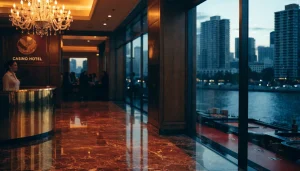 Melbourne Casino Guide: Hotels, Games and What to CheckReview what can be verified about casino hotels, room deals, poker, access and facilities, and which booking or venue details still need…
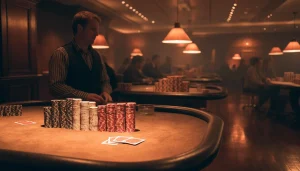 Casino in Hobart: Poker, Stays and Practical DetailsFind information on poker formats, accommodation, dining and access. Cash games depend on an available seat, while tournaments require registration.

For a practical decision, the relevant record is a current venue page or direct confirmation that identifies the exact facility or event, its location, availability and applicable conditions. If those particulars are not stated, the sensible classification is unconfirmed—not an assumed feature, and not a promise that can be relied on when planning a visit.
Parking, Bingo and the Online-Casino Boundary
Parking and bingo are separate venue questions, even when both are associated with a casino visit. For a Tasmanian casino, the useful distinction is between a facility that forms part of the venue and an option provided by a nearby business. A car park’s location, fees, access arrangements and operating hours are not interchangeable with those of the casino itself.
Valet parking needs its own confirmation. It may involve a separate drop-off point, operating times or charges, so the word “valet” alone does not establish what is offered. The same applies to claims of free parking: the relevant terms could depend on the facility, the time of visit or other conditions. A stated price should be checked against the current terms before it is treated as the final cost.
Legal Restriction
Under the Interactive Gambling Act, an Australian-run operator cannot provide online casino games, such as pokies, blackjack, and roulette, to people in Australia.
Bingo also needs to be treated as a specific event or facility, not assumed to be part of the casino’s regular operation. A useful listing would identify whether bingo is hosted by the casino or by another organisation, and set out the applicable dates, entry conditions and costs. Without those details, a general reference to bingo cannot establish that a session is available.
Online casino services are different
The phrase “casino in Tasmania” can refer to an in-person venue, while “online casino” describes a different service with a different legal position. Under the Interactive Gambling Act, an Australian-run operator cannot provide online casino games to people in Australia. That restriction covers games such as pokies, blackjack and roulette; it is not a distinction based on whether the player is physically in Tasmania or another state.
Offshore platforms sit outside Australian regulation. Their availability does not make them Australian-licensed services, and the fact that a site can be reached does not establish that it is regulated under Australian law. Australian players are technically not committing an offence merely by using an offshore platform, but that does not remove the regulatory gap or make an offshore operator subject to Australian oversight.
That distinction matters when comparing an in-person casino with a website carrying casino-style games. A physical venue’s parking or bingo arrangements do not indicate that an online version is lawful, locally regulated or operated by the same business. Likewise, a website using familiar casino language is not evidence that it has a Tasmanian venue or a local licence.

For someone assessing the best casino in Tasmania in 2026, parking terms and bingo availability are practical venue criteria; online access is a separate legal and service question. The comparison should keep those categories apart. Any claim about parking should specify whether it concerns self-parking or valet service and what conditions apply. Any bingo listing should identify the organiser and session terms. Online casino claims should be assessed against the Australian prohibition on locally provided real-money casino games and the absence of Australian regulation for offshore platforms. A single label cannot settle all three.
Accommodation Near a Casino: Separate the Stay from the Venue
A place to stay near a casino is not necessarily part of the casino, and a nearby booking is not the same product as a casino hotel. That distinction matters when comparing accommodation in Tasmania: the room may be offered by an independent hotel, motel, apartment or other lodging provider, with no connection to the gaming venue beyond its location.
No particular property, price or accommodation deal can be established here. A package described as a casino promotion should therefore be treated as an offer requiring its own terms, not as proof that a room is included. The key items are the named accommodation provider, what the quoted price covers, the booking dates, cancellation conditions and any requirement to reserve through a particular channel. Without those details, a headline offer has no calculable final value.
Do
- Use the property's exact address and a mapped route to determine distance
- Check the total payable amount including transport and parking charges
- Verify the specific accommodation provider and booking conditions
Don't
- Assume "near" describes a specific walk or drive time
- Rely on promotional labels as proof that a room is included
- Assume a casino's name in a listing guarantees the accommodation
Proximity also needs a practical definition. “Near” may describe a short walk, a drive or simply the same general area; the wording alone does not establish distance or travel time. A useful comparison uses the property’s exact address and a mapped route to the intended venue, then accounts for the actual method of travel. A low room rate can cease to be low once transport, parking or other required charges are added. None of those costs should be assumed from a location label.
The same separation applies to packages. A room booking does not establish access to casino facilities, and a casino-related promotion does not establish that lodging is part of the benefit. Where a package is advertised, its conditions should identify the accommodation provider, eligibility, applicable dates, included services and exclusions. If those terms are absent or unclear, the value cannot be compared reliably with an ordinary room booking.
For accommodation near a casino, the meaningful comparison is therefore between complete stays, not promotional labels. The calculation needs the total payable amount, the location relative to the venue, the services actually included and the conditions that could change the booking cost. A room-only rate should not be compared with a package price as though they cover the same items. Nor should a casino’s name in a listing be read as evidence that the casino operates or guarantees the accommodation.
Tasmania’s casino location, opening times and trading hours are separate venue details; they do not establish where independent accommodation is situated or whether a particular property is available. Those details need confirmation from the relevant venue or lodging provider before they can support a travel plan. Likewise, the existence of gaming machines at a venue would not establish a hotel, room offer or accommodation discount.
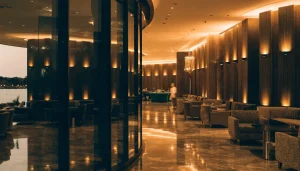
The safe distinction is straightforward: accommodation is supplied by the property named in the booking, while casino access and any venue-related offer depend on separately stated conditions. Until the property, price and inclusions are identifiable, “casino accommodation deal” is a description, not a price comparison.
Contact Details, Bars and Event Queries
Contact information is useful only when it identifies the right venue and is current. A phone number copied from an old directory can lead to a disconnected line or an unrelated business; a map pin can mark a general complex rather than the public entrance. For a Tasmanian casino visit, confirm the venue’s identity against its own current listing, then use the published contact channel for questions about access, events or facilities.
A call is most useful when the question is specific. Ask whether the bar is open on the intended date, whether a concert is scheduled, or which entrance serves the event space. Those details can change independently of the venue’s general operating status. A listing that names a bar or event without a date does not establish that it will be available during a particular visit.
Bar searches can mean different things: a place to have a drink, a meeting point before an event, or a venue open late. Check the bar’s own hours and any entry conditions rather than assuming they match the casino’s. If the visit is tied to a performance, confirm whether the bar is accessible to event attendees and whether access requires a separate ticket or booking. These are operational details, not minor extras; a venue-wide opening time does not settle them.
Concert information should be checked against a dated event listing. Confirm the performer, location within the property, start time, ticket conditions and any changes or cancellations through the event organiser or venue. A general entertainment page may describe past programming rather than a current schedule. For travel planning, the relevant detail is the event’s actual entrance and arrival guidance, not simply the name of the property.
Map results need the same scrutiny. Check that the pin corresponds to the casino entrance rather than a nearby building, service road or broader entertainment precinct. If driving, verify the approach road and the location of public parking before setting off. Parking arrangements can differ by entrance and event, so a map label alone does not establish availability, access hours, fees or whether a particular area is open to visitors.
Questions about baccarat or craps also benefit from direct confirmation. A game name appearing in a general description does not confirm that a table is operating on a particular day. Ask whether the game is offered, whether it is available at the planned time and whether any entry or table conditions apply. The answer should be specific to the intended visit; broad promotional wording is not a schedule.
The practical sequence is straightforward: identify the exact property, confirm the contact channel, check dated event and bar information, then verify the entrance and parking route. Each point resolves a separate uncertainty. A phone number, a map pin and an event listing are not interchangeable evidence, even when they appear together on a directory page.

Buffet, Breakfast, Jobs and Rewards: Details Still to Verify
Breakfast, buffet, employment and rewards searches point to different decisions, so a single “casino resort” label is not enough to establish what is available. A resort description may refer to accommodation or other services without confirming that breakfast is included, that a buffet operates, or that a particular rewards programme applies at the casino. Each item needs its own current terms.
For breakfast, the useful details are whether it is served on site, which venue provides it, the days and hours of service, and whether it is included with a room or charged separately. A breakfast buffet is a more specific offer: its existence, service times, menu and price should be stated directly by the venue or the food outlet. A general reference to dining does not settle any of these points. Nor does a past promotion establish that the same offer remains available.
The same distinction matters for buffet searches more broadly. “Buffet” may describe a particular restaurant service or a limited-time offer, rather than a permanent feature of a casino property. Before treating it as part of a stay, the relevant terms are the operating dates, booking requirements, price and any conditions attached to access. Without those details, the offer has no reliable value to put into a trip budget.
A rewards programme also needs to be assessed by its written terms, not by the name alone. The material points are how membership is earned, what activity qualifies, how rewards can be redeemed, whether they expire, and whether exclusions apply. A programme may cover only specified venues or purchases. A claim that a property has rewards does not establish that every casino visit, meal or stay earns a benefit.
Breakfast and Buffet
Requires confirmation of the providing venue, service hours, and whether it is included in the room rate or charged separately.
Rewards Programmes
Must be assessed by written terms regarding how membership is earned, redemption methods, and applicable exclusions.
Employment
Requires a current vacancy identifying the employer, role, duties, and application process.
Employment searches require a different kind of verification. A current vacancy should identify the employer, role, location, duties, employment type and application process. A general careers page may describe the organisation but does not confirm that a casino job in Tasmania is currently open. Job titles alone are not enough to compare offers; hours, pay arrangements and employment conditions belong in the vacancy or formal offer, not in an assumption based on the venue’s name.
The practical check is to separate confirmed terms from promotional language. For a meal, that means a named outlet and current service information. For a reward, it means eligibility and redemption rules. For work, it means an identifiable vacancy and employment terms. For a resort package, it means an itemised account of what the rate includes. If a detail cannot be tied to a current venue notice or formal offer, it should not be counted as a benefit or as part of the expected cost.
Opening Status, Development and Entertainment
A search for whether a Tasmanian casino is open can refer to several different things: whether the venue is operating, whether particular facilities are available, or whether an event is taking place on a given date. These are separate checks. A general listing or an older review may describe a past position, not the venue’s current status.

For a reliable picture, use the venue’s own current announcements and contact channels, and check the date attached to any public notice. Temporary closures, changes to operating hours and event cancellations can make an otherwise accurate older page misleading. If a visit depends on a particular facility or performance, confirm that detail separately rather than treating the casino’s general operating status as confirmation.
Development claims need the same date discipline. A proposal, a planning application, an approval and completed work are different stages, not interchangeable descriptions of a project. A report about proposed changes does not establish that construction has begun or that new facilities are available. For a useful assessment, identify what stage the project has reached and whether a later announcement has changed its scope or timing. Without that distinction, “development” can describe anything from an idea to a finished building.
Employment information also changes as vacancies open and close. A general statement about casino employment does not confirm that a particular role is available, what its conditions are, or whether applications are being accepted. Current vacancies and employment terms belong in the relevant employer’s own recruitment material. Older job listings may remain visible after the position has been filled; the date and application status matter more than the listing’s search prominence.
Entertainment and event listings are similarly date-specific. A venue may publish performances or other activities, but an event name alone does not establish that it is still scheduled or that access is included with general entry. Check the current listing for the event date, any booking conditions and cancellation updates. A published programme is a schedule, not a guarantee that every listed activity will proceed unchanged.
A review can help describe someone’s past visit, but it should be read as a dated account rather than a current operating record. Comments about atmosphere, service or entertainment may remain useful as personal impressions; claims about opening status, facilities or upcoming events require current confirmation. The practical test is whether the information answers the specific question being decided today. When it does not, the review is context, not evidence of present availability.
Restaurants and Dining Options
A search for restaurants at a Tasmanian casino can refer to two different arrangements: a dining room within the casino property, or an independent restaurant elsewhere in the surrounding area. The distinction affects walking distance, access and whether a meal is part of the venue experience. A restaurant described as “near” a casino is not necessarily operated by it, located inside it or covered by the casino’s booking arrangements.
A useful dining listing identifies the restaurant itself and its relationship to the casino. Beyond that, the practical details are specific to each venue: its menu, service periods, booking policy and any conditions on entry. Those details should be checked against the restaurant’s own current information before a visit is planned. A venue name alone cannot establish what is served or when the kitchen is operating.
Menus matter for more than preference. They show whether the available meal suits the occasion, whether dietary requirements can be accommodated and whether prices are visible before ordering. A broad label such as “restaurant” does not establish any of those points. Nor does it indicate whether service is table-based, whether bookings are accepted, or whether dining is limited to particular times.

The location should also be read precisely. “At the casino” suggests an on-site option, while “near the casino” may mean a separate business in the district. That difference can change the route, the need for a separate reservation and the amount of time allowed between dining and other plans. A map pin or search-result label is not a substitute for a venue’s own address and access information.
For a restaurant comparison, the useful terms are concrete: current menu, prices, opening hours, booking requirements, dietary information and location. If any of those are not published clearly, the cost of the meal or the feasibility of the visit cannot be calculated reliably. A menu can change; a listing may remain online after the details have changed. The date attached to information is therefore part of its value, not a decorative detail.
Casino dining should not be assumed to mean one fixed format. It may refer to a particular restaurant, several venues, or simply independent dining options in the area. Each claim needs to be tied to an identifiable business. This keeps restaurant information separate from buffet or food-court listings, which describe different service arrangements and should be assessed on their own terms.
The phrase “Tasmania casino restaurants” does not identify a specific property or establish a dining offer. The dependable comparison is between named restaurants with current, usable details—not between broad labels that leave location, menu and service conditions unresolved.
Spa Searches, Address and Dress-Code Questions
A Tasmanian casino address is a practical detail, not something to infer from a property name or an old map listing. Similar names can point to different businesses or locations, while map results may preserve details after a venue changes. Before planning a journey, the property identity and street address need to match on a current, official venue page. A map pin is useful for navigation; it is not confirmation that the destination is the intended casino.
The same distinction applies to bars. A bar listing may be attached to a wider property, refer to a past offering or omit changes to access and operating arrangements. Its presence in a directory does not establish that it is part of a casino, open to all visitors or available at a particular time. Those are separate details to confirm through the venue’s current information. Dining options and menus are a different question and should be assessed separately.
Spa searches require particular care because the word can refer to a day spa, a treatment service, a pool area or facilities at a nearby hotel. None of those descriptions, on its own, proves that a casino operates a spa. A photograph, accommodation listing or package reference may concern another business on the same site. Confirmation should identify the service provider, its location and whether access is independent of any hotel stay. Without those details, a spa should not be treated as a casino amenity.
Dress-code information is also property-specific. A general description of a venue does not settle requirements for a particular bar, event or area, and older visitor comments may no longer reflect entry policy. The useful detail is the current rule for the intended destination and occasion, including whether different areas have different expectations. If that rule is not stated by the venue, formal attire should not be assumed—or ruled out—on the basis of convention.
Address, spa and dress-code checks answer different questions: where the property is, what services it actually operates and what conditions apply at entry. Keeping them separate prevents a nearby business from being mistaken for a casino facility. Searches about employment or gaming products also do not establish location or entry details; those matters require their own current information rather than inference from a venue label.

Food, Food Courts and Pool Facilities
Food-court and pool searches concern facilities, not simply the presence of a casino. A food court implies a shared area with casual food outlets; it is not interchangeable with a restaurant, bar or room-service offer. Likewise, a pool may belong to a hotel or leisure complex rather than the casino itself. Treating either feature as part of a venue without confirming the exact property can turn a useful plan into a detour.
For food, the relevant distinction is whether the venue has a dedicated food-court area, separate outlets elsewhere on the property, or no such arrangement. The name of a dining venue alone does not establish that it operates as a food court. Current outlet listings and the venue’s own facilities information are more useful than a general description of casino amenities. Opening times and access conditions matter too: a facility can exist without being available at the time of a planned visit.

Pool access needs similar care. A pool associated with a hotel or adjoining complex may not be available to casino visitors generally. The property description should identify where the pool is located and whether access is included with a stay, restricted to particular guests, or separately arranged. Those distinctions affect whether the facility is relevant; the word “pool” on a broad property listing does not settle them.
For anyone comparing Tasmanian casino facilities, food-court and pool availability should be assessed as separate, property-specific questions. The useful record is concrete: the named facility, its location within the property, who may use it, and its current operating information. Without those particulars, neither a casual meal option nor pool access can be treated as part of the casino offer. A restaurant listing answers a different question, and an accommodation description does not by itself confirm access to leisure facilities. The distinction is administrative rather than cosmetic: each feature has its own access conditions and should be verified on that basis.
What does the legal status of offshore online casinos and NSW gambling law say?
Australian-run online casinos cannot legally offer online casino games such as pokies, blackjack or roulette to players in Australia. It is technically not illegal for Australian players to use offshore casinos, but those platforms are not regulated under Australian law; access may also be restricted by the casino or software provider.
What are the different types of pokies?
Examples include progressive jackpot pokies, which add a portion of bets to a growing jackpot, and buy-bonus pokies, which let players pay to enter a bonus round directly. Online pokies are powered by random number generators, so each spin is independent.
Which club has the most pokies in NSW?
Club Liverpool has the highest number of operational poker machines among clubs in NSW.