
Check What’s Open Before You Head Out
Casino operating hours do not confirm access to every venue or service, so check the specific part of the property you plan to visit.

What “Open Now” Means at an Australian Casino
“Open now” can refer to two different things: whether a casino is operating, and whether the part of the property relevant to a visit is accessible at that time. Those are not interchangeable. A casino’s round-the-clock operating status does not, by itself, establish that every restaurant, bar, event space or other facility inside it is available continuously.
All major Australian casinos operate 24 hours a day. That gives a useful baseline for checking whether a casino is operating, but it is not a guarantee of access to every area or service. A property can remain open while a particular facility has its own schedule, is temporarily unavailable or requires separate arrangements. The word “open” therefore needs a defined object: the casino, a named venue within it, or a particular service.
This distinction matters when looking for a casino nearby that is open at the moment. A general listing may describe the property’s operating status without confirming access to a specific venue. A result marked open is not necessarily a live confirmation of every facility inside. For a time-sensitive visit, the property’s current information is the relevant check; a broad description of casino operating hours cannot settle the status of each component.
If you’re looking for pokies you can play online in Australia in 2026, this list offers a starting point for checking the operators’ stated licensing and payment details. Review each casino’s terms and availability before signing up.
-
WinSpirit Casino
- License
- Curacao eGaming OGL/2024/923/0383 (Antillephone N.V.)
- Min. deposit
- A$30
WinSpirit Casino lists a Curaçao eGaming licence, OGL/2024/923/0383, issued through Antillephone N.V. Its stated minimum deposit is A$30.
-
Bizzo Casino
- License
- Curacao Gaming Control Board (TechSolutions Group N.V.)
Bizzo Casino lists the Curaçao Gaming Control Board as its licensing authority, with TechSolutions Group N.V. named in connection with the licence.
-
JeetCity Casino
- License
- Curacao eGaming (Dama N.V.)
JeetCity Casino lists a Curaçao eGaming licence associated with Dama N.V.
-
House of Pokies
- License
- international iGaming licence – jurisdiction not named in the source
- Payout speed
- PayID 1-24 hours
- Min. deposit
- A$30 (PayID from A$10)
House of Pokies states that it holds an international iGaming licence, though the jurisdiction is not named. Its listed PayID payout speed is 1–24 hours, and the minimum deposit is A$30, or A$10 when using PayID.
-
LevelUp Casino
- License
- Curacao eGaming OGL/2023/174/0082 (Dama N.V.)
- Min. deposit
- A$15
LevelUp Casino lists Curaçao eGaming licence OGL/2023/174/0082, associated with Dama N.V. Its stated minimum deposit is A$15.
-
LuckyVibe
- License
- Curacao Gaming Control Board OGL/2023/176/0095 (Hollycorn N.V.)
LuckyVibe lists a Curaçao Gaming Control Board licence, OGL/2023/176/0095, associated with Hollycorn N.V.
-
Playfina Casino
- License
- Curacao eGaming (Hollycorn N.V., since 2017)
- Min. deposit
- A$20-30 (depends on the offer)
Playfina Casino lists a Curaçao eGaming licence associated with Hollycorn N.V. since 2017. Its stated minimum deposit is A$20–30, depending on the offer.
-
JustCasino
- License
- Curacao Gaming Control Board
JustCasino lists the Curaçao Gaming Control Board as its licensing authority.
-
Vegaz Casino
- License
- Curacao OGL/2024/1335/0780
- Min. deposit
- EUR 20
Vegaz Casino lists Curaçao licence OGL/2024/1335/0780. Its stated minimum deposit is EUR 20.
-
Golden Pokies
- License
- Curacao
Golden Pokies lists Curaçao as its licensing jurisdiction.
There is also a difference between a casino and other gaming venues. A search for a pub with gaming facilities may refer to a separate business, not a casino property. The fact that major casinos operate 24 hours says nothing about the opening status of a pub or another independently operated venue. The category of venue has to match the intended destination before an “open” label can be useful.
Entry requirements are a separate test from operating status. The minimum age for entry to a casino is 18 across Australia. Being of legal entry age does not mean that the property or a particular facility is operating, and operating status does not override the age condition. These are independent conditions: one concerns whether access is permitted by age, the other whether the relevant venue is accessible at that time.
Valid photo identification is required for entry to all major Australian casinos. An assumption that a person appears old enough is not a substitute for identification. For an immediate visit, the practical calculation is straightforward: the casino may be operating, but entry still depends on meeting the age requirement and presenting valid photo ID. A result showing that a venue is open cannot confirm either condition for an individual.
“Near me” adds another separate question: whether the venue is close enough to be a practical option. Proximity does not verify that the venue is the right type, that a particular facility is open, or that entry conditions have been met. Location information and operating information answer different questions. Treating them as one answer can turn a nearby result into a wasted trip.
 Online Pokies with E-Wallets in AustraliaLearn why e-wallet pokies describe a payment method rather than a game, and why deposit support does not guarantee the same withdrawal…
 Golden Pokies in Australia: Rules and Online PlayLearn how Australian rules treat offshore pokies, what ACMA can do, and why a casino name or foreign location does not alter…
The same care applies to wording such as “open now” or “open 24 hours”. The first is a time-specific status, while the second describes the operating pattern of the property. For major Australian casinos, the established operating pattern is 24 hours a day. It should not be expanded into a claim that every internal venue has uninterrupted access. When a visit depends on one particular facility, its own status needs to be checked rather than inferred from the casino’s general operating hours.
A useful assessment separates the decision into three parts: the type of venue, the status of the relevant property or facility, and the conditions for entry. A casino operating around the clock addresses only the second part at the property level. The nationwide age rule and photo-ID requirement address entry. A nearby pub or other gaming venue falls outside the statement about major casinos, and a specific facility within a casino may not share the property’s operating pattern.
The result is a narrower but more reliable meaning of “open now”: the casino itself may be operating, while access to a chosen facility remains a separate matter. For major Australian casinos, continuous operation is the baseline; 18 is the minimum entry age; valid photo ID is required. None of those facts turns a general listing into confirmation of every service available at the door.
Do
- Check the specific venue or facility schedule
- Verify legal entry age (18+)
- Present a valid photo ID
Don't
- Assume all internal facilities are open 24/7
- Rely on a general "open" label for specific services
- Assume appearance of age replaces identification
Early Starts and Opening Hours
An early-morning visit depends on more than whether a casino property is operating. All major Australian casinos run around the clock, so the property-level answer is continuous operation. That does not establish that every gaming area, restaurant, bar, hotel service or entrance is available at every hour. A venue can remain open while a particular facility follows a separate schedule.
The distinction matters for searches about pokies available at dawn. “Open” can refer to the casino as a whole, a particular gaming area or another service inside the property. Those are not interchangeable conditions. The fact that a major casino operates 24 hours confirms the first; it does not, by itself, confirm the opening hours of each facility within it.
For an early start, the useful check is therefore the schedule for the specific venue and facility, rather than a general statement about the casino’s operating hours. Current information from the venue can clarify whether the relevant area is accessible at the intended time. A map listing or a page describing the property as open all day may answer the property-level question but leave the facility-level one unresolved.
This also explains why searches for a venue open at a particular early hour can produce an apparently simple result that is not precise enough for a visit. A listing may report continuous casino operation without identifying which entrance or gaming area it covers. Another page may refer to a restaurant or hotel service rather than the gaming floor. The result is not necessarily wrong; it may simply describe a different part of the property.
 Real-Money Online Casinos in Australia: Legal GuideLearn what “real money” means under Australia’s Interactive Gambling Act 2001, why offshore licences are not Australian approval, and how to assess…
 Pocket Pokies Casino in Australia: What to CheckLearn what the Pocket Pokies name does—and does not—confirm, including whether it identifies an operator, app, promotion or game catalogue.
The same distinction applies when the intended visit is later in the morning. A casino’s round-the-clock status does not mean every amenity follows identical hours, nor does it confirm that a particular service is operating at the time required. The relevant question is not only whether the property is open, but whether the particular destination within it is accessible then.
A practical way to read venue information is to separate three details: the casino’s overall operating status, the hours attached to the specific facility, and any access conditions stated for that facility. If a page gives only the first detail, it should not be treated as confirmation of the other two. If a listing appears to cover the entire property but the intended destination is unclear, the listing has limited value for planning an early visit.
The phrase “open now” can also refer to an online page rather than a physical casino. That is a different matter from venue opening hours. Under the Interactive Gambling Act 2001, operators cannot provide real-money online casino games to people in Australia. The Australian Communications and Media Authority (ACMA) enforces the federal rules and can ask internet service providers to block access to websites offering prohibited interactive gambling services or advertising them in Australia. A site loading successfully does not establish that it is an authorised Australian venue or a lawful online casino.
Illegal Online Gambling
Under the Interactive Gambling Act 2001, operators cannot provide real-money online casino games to people in Australia, and the ACMA enforces these blocks.
ACMA’s enforcement record also concerns websites and services, not the opening hours of a physical gaming floor. The authority has blocked more than 1,455 illegal gambling and affiliate websites since enforcement action began in November 2019. Reports differ on the number of illegal services that have withdrawn since 2017: one figure is more than 210, while another is more than 190. Neither count answers whether a local casino facility is open at a given hour.
For a physical visit, the most reliable interpretation is narrow: major Australian casinos operate continuously, but a particular facility’s schedule must be checked separately. That keeps a property-wide opening statement from being mistaken for a promise about every service under the same roof.
Good Friday and Other Public-Holiday Hours
A casino’s ordinary operating pattern does not, by itself, confirm that its gaming areas will be accessible on Good Friday. The same distinction applies to a same-day check: information showing that a venue normally operates does not establish its arrangements for a public holiday. The date matters, and the relevant venue’s current notice is the useful evidence.
Casino licensing in Australia is handled by state and territory jurisdictions. Each property operates under a licence issued by the jurisdiction where it is located, so holiday arrangements should not be treated as a single nationwide rule. A notice for a casino in one state does not settle the position for a venue elsewhere. Nor does a general statement about casino operations replace a property-specific announcement.

What to verify for Good Friday
The most useful check is a current notice from the casino itself that identifies Good Friday and states whether the gaming areas are open. A general opening-hours page may show the usual schedule without addressing public holidays. If the page does not make the date clear, contacting the venue directly avoids treating an ordinary schedule as a holiday confirmation.
The wording matters. A notice about the hotel, restaurants, bars or other parts of a property does not necessarily establish access to its casino. Likewise, a casino notice may not describe every facility within the wider venue. The relevant detail is whether the specific area intended for a visit is open, and what hours apply on that date.
For a visit planned on the day, check for updates close to departure. A dated notice is more useful than an undated general schedule; a direct confirmation from the venue is more useful than an assumption based on its usual pattern. If the available information is unclear, the status should be treated as unconfirmed rather than inferred.
Same-day and evening checks
“Open today” depends on the date and the venue, not simply on a listing that labels a casino as operating. On Good Friday, a current notice should explicitly cover the holiday. On another day, the ordinary schedule may be relevant, but it still needs to match the venue and the part of the property being visited.
Verify Holiday Access
-
1
Identify Jurisdiction
Determine which state or territory the casino is located in, as licensing is handled locally.
-
2
Find Official Notice
Locate a current announcement from the casino specifically mentioning Good Friday.
-
3
Confirm Facility
Verify that the specific gaming area or facility intended for the visit is listed as open.
-
4
Contact Venue
Reach out to the venue directly if the dated notice remains ambiguous.
An evening plan needs the same care. A property’s general operating information does not automatically confirm that every gaming area is available at the intended time, particularly when the date has a public-holiday schedule. Checking the specific venue’s current information is more reliable than relying on a search result snippet or an old listing, which may not show the terms or date behind its claim.
The practical order is straightforward: identify the state or territory, locate the casino’s own current holiday information, confirm the date and the relevant area, then contact the venue if any part remains ambiguous. This is not a nationwide timetable; it is a property-level check within a jurisdiction-based licensing system. An ordinary schedule answers what happens under ordinary conditions. Good Friday requires confirmation for Good Friday.
Finding a Nearby Casino and Checking Its Address
“Near me” is a distance question, not a venue name. The result depends on the starting point: a casino that is nearby from one suburb may be a poor fit from another. A useful comparison therefore begins with the actual location, then checks that the map result refers to the intended property rather than a similarly named business or a broader entertainment precinct.
Australian casino listings illustrate why the address matters. Lasseters Casino is at 93 Barrett Drive, Alice Springs, NT 0870, Australia. Jupiters Gold Coast Casino & Hotel is on Broadbeach Island, Gold Coast. The first listing gives a street address; the second identifies a place on an island precinct. These details are not interchangeable formats, so a pin or directions result should be matched to the venue’s stated location before travel is planned.

A map result can be useful for comparing distance, but the name alone is not enough to confirm the destination. Check that the listing identifies the casino itself and that its location matches the venue’s published address or precinct. If the map shows a hotel, shopping area or general complex rather than the gaming venue, the apparent proximity may be misleading. A precise destination also makes it easier to compare routes from the same starting point, instead of relying on a ranking that may use a different location or search radius.
The same distinction applies when a result appears to be the closest casino open now. A location pin can indicate where a property is; it cannot, by itself, establish whether the relevant entrance or facility is available at the time of arrival. Likewise, a result for a nearby town or suburb does not confirm that a casino is located there. Location and current access are separate checks, and combining them into one assumption is how a short trip becomes an unnecessary one.
Early-opening searches have the same geographic issue. A venue may be close in map distance but not the most practical destination once the route and the exact property entrance are considered. The address should be checked before departure, particularly where the listing uses a precinct name rather than a street number. For Broadbeach Island, the stated location identifies the destination at precinct level; it should not be rewritten as a street address. For Lasseters, the full street address gives a more specific destination.
Lasseters Casino
Located at 93 Barrett Drive, Alice Springs, NT 0870, Australia.
Jupiters Gold Coast Casino & Hotel
Located on Broadbeach Island, Gold Coast.
Country Club Casino
Located on Country Club Avenue in Prospect, Meander Valley, Tasmania.
Searches mentioning Redcliffe also need to be treated as place-based requests rather than proof of a venue’s location. A suburb in a search phrase does not establish that a casino is situated there or that a result in the surrounding area is the closest match. The sensible comparison is between confirmed venue locations and the intended starting point, not between a place name and an assumption.
When the purpose is to find the nearest venue, compare actual locations from the same origin and verify the destination label. When the purpose is to find one that is open today, confirm access separately with the venue. Neither a short map distance nor a current-looking listing settles both questions. The address establishes where the property is; the current venue information establishes whether a visit is feasible at that time.
Can a Casino Be Open 24 Hours?
Yes. All major Australian casinos operate around the clock. That establishes continuous operation at the property level; it does not mean every service or area inside a casino remains available at every moment.

The distinction matters because “open” can describe more than one thing. A casino may be operating continuously while an individual restaurant, bar, entertainment area or other facility follows its own schedule. A venue-wide statement therefore cannot be treated as confirmation that a particular facility is open at the time of arrival.
The same applies to access. Continuous casino operation does not, by itself, establish that every entrance or area is available to every visitor at all times. A property can remain in operation while access conditions differ by area or service. The practical question is not only whether the casino is open, but whether the specific part of it needed for the visit is accessible.
For a “24 hours” listing, the useful distinction is:
- Property operation: the major casino continues operating throughout the day and night.
- Facility availability: a particular restaurant, bar or other service may have separate operating arrangements.
- Access to a particular area: a general operating-hours statement does not settle the access conditions for every part of the property.
This is why a broad result for casinos open around the clock is not a complete schedule. It answers whether the major casino operates continuously, not whether every facility inside it does. Any claim about an individual service needs to be checked against information for that service, rather than inferred from the casino’s overall operating status.
“Near me” adds a separate issue: distance does not change what 24-hour operation means. A nearby casino may operate continuously, but that fact alone does not identify which facilities are available or establish the conditions for entering them. Location and facility availability are separate checks; neither should be substituted for the other.
The wording “open now” can also be narrower than a 24-hour label suggests. It may refer to a particular area or service rather than the whole property. When the information concerns only the casino’s general operation, it supports a limited conclusion: the major casino is not described as having a daily shutdown. It does not settle every detail of a visit.
That is the useful reading of searches for a casino open 24 hours: the main property operates continuously, but the phrase is not a guarantee of uninterrupted access to every facility within it. A precise answer depends on the area or service in question. The distinction is small in wording and material in planning.
The Australian Casino Landscape in 2026
A national view gives a different answer from a nearby-venue check. Australia’s casino market is spread across state and territory boundaries, and the rules are administered locally: each casino operates under a licence issued by its own jurisdiction. A countrywide count can describe the market’s reach, but it cannot establish whether a particular gaming venue is accessible at a particular time.
A specialist casino-market review places the number of full-scale casinos at more than 20 across Australia’s eight states and territories. That figure is a sourced market estimate, not a permanent register: venues, classifications and listings can change. It is useful as an indication of scale, not as a live count of doors currently open.
The same distinction applies to a separate figure from a specialist gambling-location review, which identifies 147 Australian cities with gambling. That is a count of cities, not casinos. A city may contain more than one gambling facility, while a casino count records properties rather than the spread of all gambling activity. Combining the figures into a single measure would therefore create a false comparison.
For someone assessing whether a gaming venue is nearby, national coverage narrows the geographic question only in broad terms. Australia has casino properties distributed across jurisdictions, but a nationwide total does not identify the closest property, its exact address or the facilities operating within it. Those details belong to an individual venue’s listing and current operating information.

The licence framework also matters to the meaning of a national result. A casino’s local operating authority comes from the state or territory responsible for that property; there is no single national casino licence that makes every venue’s arrangements identical. Accordingly, a national market figure should not be read as confirmation of uniform entry rules, hours or access conditions.
The figures describe two different layers of the market: a review’s count of full-scale casinos and another review’s count of cities where gambling is available. Neither functions as a real-time availability check. For a location-independent overview, they show that casino gaming is not confined to one city or one jurisdiction. For an immediate visit, the relevant unit is still the specific property, not the national total.
Late-Night Access and Venue Locations
Late-night access is less complicated at major Australian casinos than the phrase “open late” suggests: they operate around the clock. That establishes continuous operation of the casino property, but it does not make every restaurant, bar or other facility available at every hour. Nor does it establish a separate closing time for any individual gaming area. The practical distinction is between the casino’s ongoing operation and the schedule of the particular part of the venue being visited.
A venue’s location is a separate calculation. Country Club Casino is in Prospect, within Tasmania’s Meander Valley, with its address placing it on Country Club Avenue. That reference identifies the property; it does not imply that every facility there follows the same timetable as the casino itself. Late access and the suitability of a particular amenity are therefore different questions, even when they concern the same building.
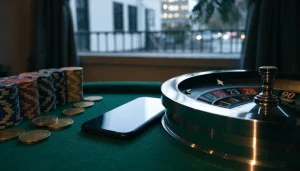
The wording “open till late” can suggest a venue that shuts after an extended evening session. For major Australian casinos, continuous operation is the relevant general position instead. A late arrival does not, by itself, mean the casino has reached a closing time. It also does not settle whether a particular dining or entertainment option is operating at that moment. Those distinctions matter when a visit depends on more than entry to the casino.
The location reference is useful only when it matches the intended destination. Prospect is in Tasmania’s Meander Valley; it is not a city-wide label that identifies every nearby venue. A precise address and the name of the property narrow down where the visit is meant to take place, while the 24-hour operating pattern concerns the major casino as a whole.
In practical terms, “open late” and “open continuously” are not interchangeable descriptions of every service on site. Major Australian casinos operate 24 hours a day, while the hours of individual facilities remain a separate matter. A late-night plan can rely on the first point without assuming the second.
Christmas Day: Check the Venue, Not the Assumption
A casino’s general operating pattern does not settle whether it will admit visitors on Christmas Day. Major Australian casinos operate around the clock, but that fact is not a Christmas Day access notice. A venue may publish a separate holiday arrangement, and the ordinary schedule cannot be used as a substitute for it.

This distinction matters when looking for a casino open on Christmas Day nearby. The relevant question is not simply whether the property operates continuously in general, but whether that particular venue is accessible on the date in question. A broad statement about Australian casino operations does not confirm admission, services or access at an individual property on a public holiday.
Casino licences are issued by the state or territory where each property operates. That jurisdictional structure is one reason a national assumption is a poor basis for planning a Christmas Day visit: the operating status belongs to the specific venue and its local arrangements, not to a single nationwide holiday schedule.
The practical check is therefore venue-specific. Look for a Christmas Day notice published by the casino itself, or contact the venue directly if its announcement is unclear. Confirm that the information applies to Christmas Day rather than ordinary trading hours or a different holiday. A general search result, map listing or statement that a casino operates 24 hours does not establish holiday admission.
This is a narrow but useful distinction. “Open” can refer to a property’s overall operating pattern, while the decision at issue is whether the venue will accept visitors on that particular date. Without a Christmas Day confirmation for the chosen casino, the general 24-hour fact cannot answer the immediate question. A nearby venue is not necessarily an available venue; location and holiday access are separate checks.
The reliable conclusion is conditional: Christmas Day access must be confirmed with the individual casino. General Australian operating information supplies context, not a date-specific guarantee. That is less convenient than a national yes or no, but more accurate than treating an ordinary schedule as a holiday announcement.

Anzac Day Searches and Northern Territory Locations
Anzac Day availability cannot be established from a casino’s ordinary operating pattern. Major Australian casinos operate around the clock, but that does not settle whether a particular venue admits visitors on the public holiday or whether every area is accessible. Holiday arrangements are set within the relevant state or territory’s licensing framework, so a general claim about national opening hours is not a substitute for checking the specific venue’s current notice.
The distinction matters for a same-day visit: the casino’s normal operation and its Anzac Day access are separate conditions. A listing that shows a venue as open does not, by itself, confirm holiday entry arrangements. No nationwide Anzac Day schedule should be inferred from the fact that casinos operate continuously at other times.
The Northern Territory offers a location-specific reference point. A specialist casino directory counts three casinos across three Territory cities; that is a directory’s snapshot, not a permanent register of the market. The same directory identifies Alice Springs as the Territory city with the largest casino count, listing one casino there. That figure is useful for orientation, but it does not establish Anzac Day hours.

Lasseters Casino is in Alice Springs at 93 Barrett Drive, NT 0870. The address helps identify the venue; it says nothing about holiday admission. For a visit on Anzac Day, the relevant confirmation is the venue’s own dated announcement or direct response, not an ordinary-hours listing or a count of casinos in the surrounding region.
The practical calculation has two parts: location and access. A nearby Northern Territory venue may be identifiable from its address, while holiday entry remains a separate point to verify. Neither the Territory-wide count nor continuous casino operation resolves that condition.
Cash, Cheques and Claims About “Top-Rated” Venues
Cash and cheque questions are separate from whether a venue is open. The national total of gaming machines endorsed on venue licences and installed in Australian casinos is 3,308. That is a count across the country, not a guide to the payment methods accepted at a particular venue.

The figure also says nothing about how many machines are available at a specific property, whether one is operating at a given time, or whether a venue accepts cash or cheques. Those details cannot be inferred from a national total. Payment arrangements need to be confirmed with the relevant venue before they are relied on; a machine count is not a payment policy.
“Top-rated” is a different claim again. A rating requires a defined measure and a comparable set of venues. Without those, a label does not establish which venue is best, what the assessment covers, or whether it is relevant to a particular visit. A large machine total is not a rating, and it does not show that one venue offers better service or terms than another.
The practical distinction is straightforward: the national count describes the scale of licensed machine installations, while payment acceptance and venue ratings are property-specific claims. Treating one as evidence for the other would turn a count into a conclusion it cannot support. A venue’s own current information is the appropriate place to check payment arrangements; any ranking should be read alongside its stated criteria and scope.